
What Classic Servers Proved About Modern Design
Stop telling me that classic servers are just about “nostalgia” or “reliving the glory days.” That’s a marketing lie designed to sell subscriptions to people who are actually just grieving a specific type of social friction. When people talk about how classic servers changed the genre, they usually focus on the graphics or the lack of quality-of-life features, but they miss the actual design shift. They miss the fact that these servers aren’t just old code; they are a rejection of the modern designer’s sentence. We’ve moved from games that demand your time through artificial friction to games that try to apologize for their own existence, and classic servers are the only places where the mechanics still demand something real from you.
I’m not here to give you a history lesson or a hype-filled retrospective. I want to pull back the curtain on the actual mechanics—the loot tables, the travel times, and the social bottlenecks—to show you why these “relics” actually work better than some modern AAA behemoths. I’ll be looking at the specific design decisions that define this movement and what they tell us about where the industry is actually heading.
Table of Contents
Simplicity as a Sentence Stripping Away Modern Complexity

Modern MMOs often feel like they’re shouting at you. Between the flashing UI elements, the twenty-minute daily checklists, and the sheer density of talent trees, the designer’s sentence has become a run-on paragraph that nobody has the breath to finish. When I look at classic servers, I see something different: a designer who decided to speak in short, punchy clauses. There is a specific kind of beauty in a game where a single item or a solitary skill tells you exactly who you are supposed to be. This isn’t just about being “old school”; it’s a fundamental lesson in game design simplicity vs complexity.
In these environments, the lack of bloat forces a different kind of engagement. You aren’t managing a spreadsheet of buffs just to stay relevant; you’re playing the game. By stripping away the layers of modern friction, these servers change the conversation from “how do I optimize this rotation?” to “how do I survive this encounter?” This shift is a huge driver for player retention in old-school servers because it respects the player’s time. It turns the gameplay back into a series of meaningful choices rather than a series of chores.
The Legacy of Limitation in Mmorpg Evolution
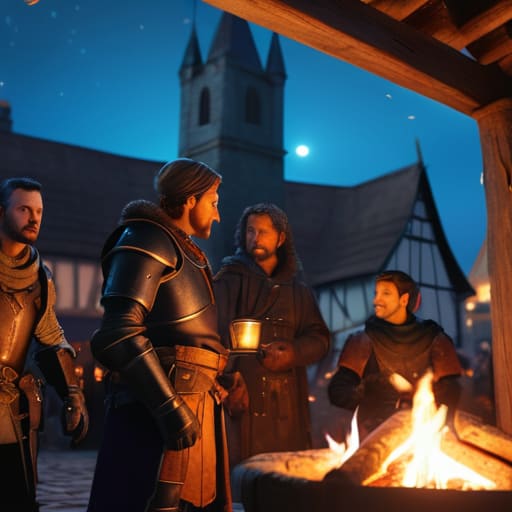
The problem with modern design is that we’ve become terrified of the empty space. In the early days, a level cap wasn’t just a number; it was a boundary that forced the community to consolidate. When you can’t out-gear your friends by grinding a new expansion every six months, you’re forced to actually interact with them. This is the core of the retro gaming community dynamics I see whenever a new “classic” server pops up. In a modern live service, the designer is constantly shouting at you to keep moving, to keep consuming, to keep upgrading. But on these older builds, the silence of a capped level cap creates a different kind of sentence: it says, “You have arrived, now go talk to someone.”
This shift in player retention in old-school servers isn’t about being stuck in the past; it’s about the stability of the social contract. When a game’s progression is predictable, the social hierarchy becomes the primary engine of the experience. You aren’t competing against a mathematical curve designed to keep you in a state of perpetual dissatisfaction; you’re competing against the guy in your guild who actually knows how to time his cooldowns. We’ve traded the frantic dopamine hits of constant patches for a slower, more meaningful way to exist in a digital space.
Five Lessons from the Digital Archeology of Classic Servers
- Treat scarcity as a social glue, not a bug. In modern MMOs, loot is often a math problem solved by efficiency; in classic design, scarcity is a conversation starter that forces players to actually talk to each other to solve a problem.
- Respect the value of “dead time.” Developers today see a player standing still as a failure of engagement, but classic servers proved that the queue, the travel time, and the downtime are the spaces where community actually forms.
- Stop trying to solve every player’s friction. Modern design tries to smooth out every bump with UI and automation, but classic servers showed that some friction—like a difficult journey or a complex craft—is exactly what makes the eventual reward feel like a sentence worth reading.
- Understand that player agency is tied to risk. When you remove the ability to fail or the cost of losing progress, you aren’t “respecting the player’s time,” you’re actually stripping away the stakes that make their decisions meaningful.
- Design for the guild, not just the individual. Modern systems are often optimized for the solo player’s dopamine loop, but the classic model succeeds because it creates systems that are impossible to navigate alone, forcing a social contract that no amount of “quality of life” patches can replicate.
The Final Syntax
Looking back, classic servers weren’t just a retreat into the past; they were a massive, collective critique of where the genre had gone. By stripping away the bloat, these servers proved that when you remove the endless quest markers and the “participation trophy” loot tables, you aren’t just making the game harder—you’re making the decisions matter again. We saw that players didn’t actually want more content; they wanted more meaningful friction. They wanted a game that didn’t try to hold their hand through every single mechanic, but instead trusted them to navigate the world. When we look at the way modern MMOs are trying to re-integrate social scarcity and meaningful progression, we’re seeing the echoes of these classic servers rewriting the modern design playbook.
As someone building my own small, messy game in my spare time, I’ve learned that every mechanic I add is a promise I have to keep to the player. Classic servers taught us that sometimes, the most powerful sentence a designer can write is the one they choose not to say. You don’t need a thousand features to create an epic feeling; you just need to make sure that when a player finally achieves something, it actually feels like they earned it. The genre is moving away from the era of endless expansion and toward an era of intentional design, and honestly? I think we’re finally starting to learn how to read the sentences correctly.
Frequently Asked Questions
If classic servers are just "re-publishing" old design sentences, why can't modern developers just write better sentences from the start instead of relying on nostalgia?
Because modern developers are often writing for a different audience—one with a much shorter attention span and a massive library of competing distractions. A “classic” sentence is slow and deliberate; a modern sentence is frantic, trying to keep you hooked every ten seconds. Most devs aren’t trying to write bad sentences; they’re just trying to win a fight against TikTok and CoD. They’re optimizing for retention, not for the clarity of the experience.
At what point does the "limitation" stop being a meaningful design choice and just become a technical debt that modern players aren't willing to pay for?
It stops being a choice the second the limitation stops forcing a decision and starts forcing a chore. A level cap is a design sentence; it tells you where the game ends so you can focus on the journey. But if a limitation exists just because the engine can’t handle more than fifty players in a zone, that’s not a “classic feel”—it’s just broken code. Players will forgive friction that creates meaning, but they won’t forgive friction that just wastes their time.
Does the success of these servers prove that the "complexity" in modern MMOs is actually just bad design disguised as content, or are we just seeing a specific demographic's preference for friction?
It’s a bit of both, but let’s call it what it is: designers often mistake friction for depth. When a system is needlessly opaque, it’s not “challenging” the player; it’s just taxing their patience. Modern complexity often feels like a designer trying to hide a shallow economy behind a wall of math. Classic servers succeed because they offer intentional friction—the kind that actually says something meaningful about the world, rather than just wasting your time.

