
The Engine Decides What Is Cheap and What Is Expensive
I spent three months of my life trying to build a seamless, open-world combat system for my solo project, only to realize I wasn’t fighting my own lack of talent—I was fighting the physics engine. Everyone talks about engines as these infinite playgrounds of possibility, but that’s a lie. In reality, an engine is a set of invisible walls that dictates exactly what your players can and cannot do. When we talk about how game engines shape design, we aren’t talking about lighting presets or polygon counts; we’re talking about the fundamental constraints that force you to decide whether your player is a god or a victim of a jittery collision box. Your engine isn’t just a tool; it’s the unspoken architect of your game’s logic.
I’m not here to give you a lecture on technical documentation or sell you on some high-end middleware. I want to talk about the scars I earned while trying to bypass limitations that ended up becoming my game’s core mechanics. I’m going to show you how to stop fighting your engine and start understanding the sentences it’s forcing you to write, so you can stop wasting months on features that were never actually possible to begin with.
Table of Contents
Real Time Rendering Impact on Aesthetics and Intent

When we talk about the real-time rendering impact on aesthetics, we aren’t just talking about whether a bush looks like a bush or a collection of green triangles. We’re talking about the psychological contract between the player and the world. If your engine can’t handle complex lighting without dropping to five frames per second, you aren’t just making a “stylized” game; you are making a decision to prioritize clarity over atmosphere. I’ve seen solo devs try to force hyper-realism on a budget, only to realize that the struggle to maintain that fidelity actually strangles their creative intent. You end up designing for the GPU rather than for the player’s experience.
This tension is where gameplay mechanics and engine capabilities collide. If your physics engine is a joke, your level design becomes a series of rigid, predictable hallways because you can’t trust the player to interact with anything that isn’t bolted to the floor. You stop designing “spaces” and start designing “corridors.” Every time you bake a lightmap to save performance, you are essentially deciding that a certain part of your world is static and dead, regardless of what your narrative says.
Technical Limitations in Level Design as Silent Commands
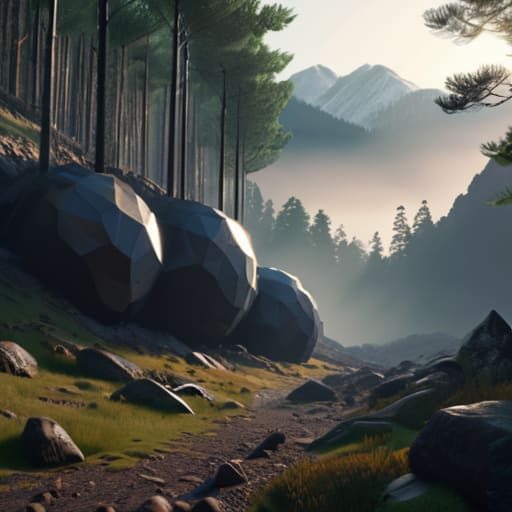
When you’re building a world, you think you’re an architect, but the engine often turns you into a glorified zookeeper. You want a sprawling, seamless valley, but the engine screams that you can’t handle that much draw distance without the frame rate tanking. Suddenly, you aren’t designing a landscape; you’re designing a series of calculated sightlines. You place a massive, jagged mountain range or a dense forest exactly where the player needs to turn, not because it looks poetic, but because it’s a convenient way to hide the fact that the rest of the world hasn’t loaded yet. These technical limitations in level design act as invisible walls that dictate the rhythm of exploration.
It’s a constant tug-of-war between your creative intent and the reality of what the hardware can actually calculate. If your physics engine can’t handle complex collision detection for a thousand falling debris objects, you stop making destructible environments and start making static, indestructible boxes. You aren’t just choosing a visual style; you are choosing which gameplay mechanics and engine capabilities will ultimately govern how a player interacts with the space. Every time you use a loading screen or a narrow corridor to mask a transition, you’re writing a sentence that says: “Stay on this path, because I can’t afford to let you wander off it.”
The Designer’s Cheat Sheet: Negotiating with Your Engine
- Stop treating your engine like a neutral canvas. It’s a set of rules you’re trying to break or bend, and the moment you stop fighting the constraints, you start making better decisions about where the player actually looks.
- Watch your draw distance, because it’s not just a graphics setting; it’s a directive. If your engine can’t render far, you aren’t just making a “foggy” game, you’re forcing the player into a claustrophobic, high-tension loop whether you intended to or not.
- If you’re building a complex economy or a massive social system, remember that your engine’s networking tick rate is a silent participant in every trade. A laggy server doesn’t just feel “bad”—it actively tells your players that high-frequency trading is a suicide mission.
- Don’t mistake “easy to implement” for “good design.” Just because your engine has a robust, one-click procedural generation tool doesn’t mean you should use it. An engine-driven landscape is a sentence that says, “I didn’t want to spend time on this,” and players can smell that lack of intent from a mile away.
- Always ask what your technical shortcuts are costing you in player agency. If you’re using invisible walls to save on navmesh calculations, you aren’t just optimizing performance; you’re telling the player that their curiosity has a hard, artificial ceiling.
The Ghost in the Machine
At the end of the day, we have to stop pretending that game design happens in a vacuum of pure creative intent. We’ve seen how the engine’s rendering limits dictate your art style, and how those invisible technical walls act as silent commands that funnel players through specific paths. Whether it’s a lighting limitation that forces a horror aesthetic or a physics engine that makes certain combat mechanics feel “clunky,” the engine is always talking behind your back. It is constantly rewriting your design document, turning your grand visions into a series of pragmatic compromises that the player experiences as “the game.”
My advice, from someone who has spent far too many nights staring at a broken physics loop in my own solo project, is to stop fighting the constraints and start listening to them. Don’t treat your engine like a hurdle to be cleared; treat it like a collaborator that is constantly trying to tell you what your game actually is. When you stop trying to force a sentence that the engine won’t let you finish, you find the true rhythm of your design. The best games aren’t the ones that bypass their limitations, but the ones that take those technical “mistakes” and turn them into the very reason people keep coming back to play.
Frequently Asked Questions
If an engine's physics system is too "good" or too heavy, at what point does it stop being a feature and start becoming a sentence that tells players they can't actually play the game they were promised?
It stops being a feature the second the player stops playing the game and starts playing the physics engine. If I’m trying to raid a boss but I’m spending half my mental bandwidth worrying about whether a physics-driven crate is going to clip through the floor and ruin my positioning, the engine is no longer a tool—it’s a barrier. You’ve stopped telling them “look how real this is” and started saying “don’t move too fast.”
How do you prevent the "engine look"—that specific way a certain middleware handles lighting or foliage—from becoming the only thing the player notices instead of your actual design intent?
You have to stop treating middleware like a finished product and start treating it like a heavy, biased brush. The “engine look” happens when you stop making design choices and start letting the defaults make them for you. If you use Unreal’s lighting without tweaking the bounce or the shadow softness, you aren’t designing a mood; you’re just letting Epic Games design it for you. You prevent it by fighting the presets until the engine becomes invisible.
When you're building something solo, how do you decide which engine constraints to fight against and which ones to just lean into so you don't spend three years building a door hinge that doesn't work?
You have to ask: “Does this constraint change the core loop, or is it just friction?” If I try to code a custom physics engine for a single door hinge, I’m not making a game; I’m making a very expensive, broken physics simulator. I lean into the constraints that reinforce my game’s identity—like using low-poly models to hide my lack of art skills—and I fight the ones that actively kill the fun. If the constraint makes the player stop playing, fight it. If it just makes the player work harder to enjoy the same thing, let it go.

