Procedural Content and the Sameness Problem
Everyone talks about procedural generation like it’s some kind of divine spark, a magical algorithm that breathes life into infinite universes. They treat it like a shortcut to greatness, but most of the time, it’s just a way for developers to avoid the hard work of actually designing anything. When people ask me how procedural generation works, they usually expect a lecture on Perlin noise or complex seed mathematics, but they’re looking at the wrong thing. They think the tech is the story, when in reality, the math is just a way of saying “I don’t have the budget to build this by hand,” and that sentence often comes across as painfully hollow to the player.
I’m not here to sell you on the hype or give you a textbook definition that you’ll forget in five minutes. I want to show you the messy, practical reality of what happens when you let an algorithm take the wheel of your game’s soul. I’ll break down the actual mechanics, but more importantly, I’ll explain the design trade-offs you make every time you swap a hand-crafted encounter for a randomized one. We’re going to look at why most “infinite” worlds feel like a repetitive slog and how you can actually use these systems to say something meaningful to your players.
Table of Contents
Perlin Noise Explained When Chaos Tries to Mimic Nature
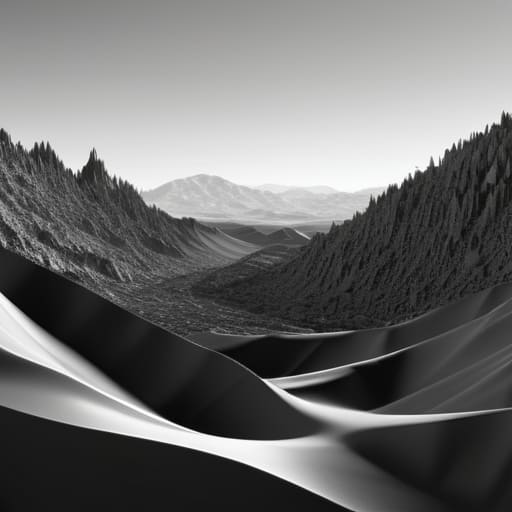
If you look at pure random number generation, you get white noise—that harsh, static snow on an old TV. In a game, that’s a disaster. It’s a designer saying, “I want a world,” but the math is actually saying, “I have no idea where anything goes.” It’s a jagged, unplayable mess of pixels that feels like nothing. To fix this, we use perlin noise explained as a way to add “smoothness” to the chaos. Instead of every point being a totally disconnected roll of the dice, Perlin noise creates a gradient. It ensures that if one coordinate is a mountain peak, the next one is a slightly lower hill, not a deep-sea trench.
This is the heart of most algorithm-driven world building. By using these noise functions in game design, we aren’t just throwing dice; we are creating a landscape where values flow into one another. It’s the difference between a world that feels like a collection of random assets and a world that feels like it has a geological logic. When I’m messing around with my own small project, I’m essentially just playing with these gradients to trick the player’s brain into seeing a horizon instead of just a math equation.
Algorithm Driven World Building and the Illusion of Intent

The problem with most algorithm-driven world building isn’t that the math is wrong; it’s that the math is indifferent. When you rely on raw noise functions in game design to spit out mountains and valleys, you aren’t actually “building” a world—you’re just setting a threshold for where a texture stops being flat. Without a layer of logic on top, the player doesn’t see a rugged landscape; they see a math equation that forgot to include a sense of purpose. A mountain range that exists just because a random value hit 0.8 feels hollow because it lacks the geological conversation between wind, water, and time.
This is where the tension between chaos and control becomes a design battle. You can use deterministic algorithms in gaming to ensure that every player sees the same “random” forest, but if that forest doesn’t react to the player’s presence, it’s just wallpaper. The trick isn’t making the world bigger; it’s making the math feel like it has an agenda. If the procedural generation doesn’t force the player to ask, “Why is this path here?” then you haven’t built a world—you’ve just generated a lot of expensive noise.
The Designer’s Cheat Sheet: How to Stop the Math from Talking Over You
- Constrain your randomness. Pure noise is just a loud, meaningless scream; you need to wrap your algorithms in “rules” that act like a leash, forcing the math to respect the boundaries of your world’s logic.
- Watch out for the “sameness” trap. A procedural system is always competing with the player’s memory, and if your algorithm repeats its favorite patterns too often, the player stops seeing a world and starts seeing a spreadsheet.
- Seed your intent. Don’t just throw a random seed at a generator and hope for the best; think of the seed as the starting punctuation of your sentence, because if the beginning is aimless, the entire landscape will feel like it’s wandering.
- Layer your systems instead of stacking them. A world feels real when the terrain affects the climate, which then affects the vegetation; if your procedural systems don’t “talk” to each other, you aren’t building an ecosystem, you’re just placing random assets on a map.
- Accept that you are a curator, not a god. You aren’t writing every single line of the world’s story, but you are responsible for the grammar; your job is to build the constraints that allow the machine to say something beautiful instead of just something loud.
The Ghost in the Machine
At the end of the day, procedural generation isn’t a magic wand that creates “content”; it’s just a way to outsource the heavy lifting of world-building to math. We’ve looked at how Perlin noise tries to smooth out the jagged edges of pure randomness and how algorithms attempt to simulate intent, but we have to remember that the math is just a tool. When you use these systems, you aren’t just saving time; you are choosing a different way to communicate with your players. If you aren’t careful, your procedural systems will stop saying “explore this beautiful world” and start saying “please don’t notice how much of this is empty.” The risk is that the math becomes the loudest voice in the room, drowning out the actual design.
My advice, from someone who has spent too many late nights staring at broken terrain meshes in my own solo project, is to treat your algorithms like unreliable narrators. They can provide the scale, but they can’t provide the soul. A thousand procedurally generated mountains are just noise if there isn’t a single, hand-placed landmark that tells the player why they should care about standing there. Don’t let the math do your thinking for you. Use the procedural tools to build the canvas, but make sure you are still the one painting the sentences that actually matter.
Frequently Asked Questions
If the math is doing the heavy lifting, how do you stop the world from feeling like a collection of random math problems instead of a place people actually want to live?
You don’t stop it with more math; you stop it with constraints. If you let the noise run wild, you just get a landscape of “randomness,” and randomness is the death of player agency. To make a world feel lived-in, you have to layer intentionality over the chaos. You use the math to build the bones, but you use hand-placed landmarks and logical resource distribution to tell the player, “This place exists for a reason.”
At what point does "infinite content" actually become a liability for player engagement and community building?
It becomes a liability the second the player realizes they aren’t exploring a world, they’re just running a math equation. When “infinite” content lacks a designer’s hand, the sentences become repetitive and hollow. You lose the “water cooler” moments—those unique, unscripted stories that happen when a specific, intentional encounter goes sideways. If every player is having the exact same procedural experience, they have nothing to talk about in the guild chat.
How much of the "soul" of a hand-crafted level is lost when you swap a designer's specific intent for a seed and a noise function?
You lose the “why.” A hand-crafted level is a conversation; a designer places a ledge specifically to force you to look at a sunset or feel a sense of dread. When you swap that for a seed, you’re replacing a deliberate sentence with a shrug. The math can mimic the shape of a mountain, but it can’t mimic the reason that mountain exists in your path. You trade intent for scale, and usually, the player feels the emptiness.

