
Emergent Fun Comes From Systems Colliding
I spent three weeks last year trying to code a destructible environment for my current project, convinced that if I just tuned the collision boxes perfectly, I’d achieve that “holy grail” of gameplay. I was wrong. Most devs treat physics like a magic trick they can buy with a high-end engine, but they miss the point entirely. They think they’re building a sandbox, when really they’re just building a very expensive math problem. The truth about how physics systems create emergence isn’t found in the complexity of the code or the number of polygons in a falling crate; it’s found in the unpredictable friction between a player’s intent and a rule that refuses to bend.
I’m not here to give you a lecture on Newtonian mechanics or sell you on the idea that more variables equal more fun. I’ve made enough mistakes in my own solo dev journey to know that “more” usually just means “more bugs for the players to exploit.” Instead, I want to talk about the design decisions that actually matter. I’m going to show you how to stop writing rigid scripts and start building meaningful chaos, focusing on the specific moments where the system stops being a set of instructions and starts being a story the player tells themselves.
Table of Contents
Reductionism vs Holism Why Your Particles Refuse to Obey

The problem with most devs is that they approach physics like a math homework assignment. They think if they just get the collision detection for a single crate right, the world will feel “real.” That’s the trap of reductionism vs holism in physics; you can spend six months perfecting the friction coefficient of a single pebble, but that doesn’t mean the mountain is going to behave like a mountain. When you build a game by just stacking individual, isolated rules, you aren’t building a world—you’re building a very expensive, very rigid spreadsheet.
Real magic happens when you stop trying to micromanage every atom and instead look at the phase transitions and collective behavior of the system. I learned this the hard way while trying to code a simple fluid simulation for my own project. I was so obsessed with the individual particle math that I missed the fact that the “water” felt like wet sand. It wasn’t because my math was wrong; it was because I hadn’t allowed the particles enough room to actually interact in a way that created something new. You have to stop writing the rules for the parts and start designing the conditions for the whole.
Phase Transitions and the Chaos of Collective Behavior
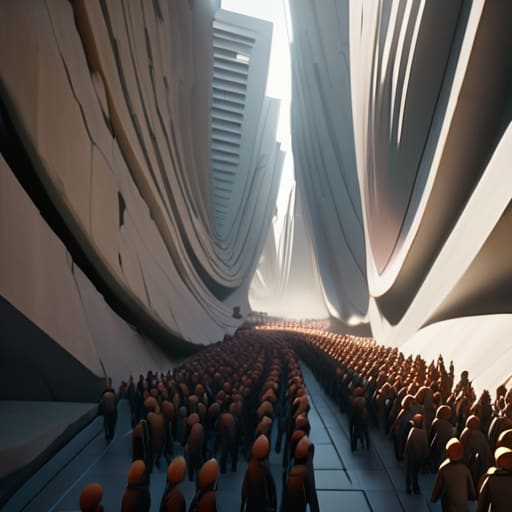
This is where the math stops feeling like a textbook and starts feeling like a riot. In physics, we call it phase transitions and collective behavior, but in game design, it’s the moment the “fun” escapes the developer’s grasp. Think about a crowd of NPCs in a simulation: individually, they are just simple state machines following a few lines of logic. But when you crank up the density or the environmental pressure, they stop acting like a collection of units and start behaving like a single, breathing organism. They don’t just walk; they surge, they bottleneck, and they panic.
The problem is that most designers try to script this “feeling” using hardcoded triggers, which is a coward’s way out. If you want true emergence, you have to lean into nonlinear dynamics and chaos. You have to accept that when you give a hundred entities a simple rule—like “stay three meters from your neighbor”—you aren’t just managing a crowd; you are inviting a complex adaptive system to take the wheel. You aren’t writing the script anymore; you’re just setting the stage for a performance you can’t entirely predict.
Stop Trying to Control the Chaos: 5 Rules for Designing Emergent Physics
- Stop coding for the result and start coding for the interaction. If you want a “destructible environment,” don’t write a script that plays a “wall breaking” animation; write a system where force meets mass. If you try to dictate the outcome, you aren’t building emergence, you’re just building a very expensive, very brittle cutscene.
- Respect the “Attention Economy” of your physics engine. Every calculation you run is a tax on the player’s immersion and your CPU’s patience. If your physics are too precise, the game becomes a math homework assignment; if they’re too loose, the player stops believing the world is real. You have to decide if the player is competing against a predictable obstacle or an unpredictable force of nature.
- Design for the “Jank” instead of trying to polish it out of existence. In a single-player RPG, a physics glitch is a bug; in a physics-driven sandbox, a glitch is often the most interesting thing a player has ever done. When a crate flies across the map because of a collision error, the player isn’t thinking about your bad code—they’re thinking about the “story” of how that crate escaped.
- Give players tools, not solutions. A designer who gives a player a “bridge-building tool” is just giving them a scripted solution. A designer who gives them a “gravity-affected plank” is giving them a sentence they can use to write their own story. Emergence lives in the gap between what the tool does and what the player imagines it can do.
- Watch the feedback loops, because they are where your game will either become a masterpiece or a dumpster fire. Physics systems are prone to “runaway” logic—where one small collision triggers a chain reaction that ends with the entire world vibrating into the void. You need to build “dampeners” into your systems, not to stop the fun, but to make sure the chaos stays within the bounds of a playable experience.
The Designer's Loss of Control

At the end of the day, trying to hard-code every possible interaction in a physics-based system is a fool’s errand. We’ve seen that you can’t just stack better math or more particles and expect a masterpiece; you have to understand that once you set those rules in motion, you are essentially handing the steering wheel to the engine itself. Whether it’s a sudden phase transition that turns a calm lake into a chaotic storm or a particle interaction that creates a movement mechanic you never actually programmed, emergence is the moment the math stops being a tool and starts being an agent. You aren’t just building a sandbox; you are writing the grammar for a language that the players—and the physics engine—will eventually use to tell their own stories.
If you’re a dev like me, staring at a broken build at 3:00 AM, it’s easy to view these emergent moments as bugs that need to be squashed. But I’ve learned that the most magical parts of a game are often the parts that refuse to obey the manual. When we embrace the unpredictability of these systems, we stop being dictators and start being architects of possibility. We aren’t just making games anymore; we are creating ecosystems where the most interesting things that happen are the things we never actually intended to happen. That is where the real play lives.
Frequently Asked Questions
If emergence is basically "unintended design," how do you actually balance a game when you can't predict how the players will break the physics?
You don’t balance for the outcome; you balance for the cost. If you try to math out every possible physics interaction, you’re just building a cage that players will eventually kick through. Instead, you design the “friction.” You make sure that when a player discovers a way to catapult themselves across the map using a physics glitch, it costs them something—stamina, a specific resource, or a risk of breaking their gear. You aren’t predicting the chaos; you’re just setting the price of admission for it.
At what point does a physics system stop being a cool emergent sandbox and just become a performance nightmare that kills the server tick rate?
It stops being a sandbox the moment the math starts competing with the actual game for the player’s attention. You hit that wall when the “cool emergent moment” is overshadowed by a stuttering frame rate or a desynced hitboxes. If I’m spending more time checking my ping than watching the physics interact, the designer has failed. A system that eats the server tick rate isn’t a feature; it’s just an expensive way to make the game unplayable.
Is there a way to write "sentences" into a physics engine that actually guide players toward specific behaviors without making it feel like a scripted cutscene?
You do it by tuning the friction, not the script. If you want players to move cautiously through a forest, don’t trigger a cutscene; just make the undergrowth catch on their collision boxes. You’re writing a sentence that says, “Movement here is expensive.” When the physics engine forces a player to choose between a high-speed sprint and a tactical crawl, you aren’t controlling them—you’re just setting the terms of their negotiation with the environment.

