
Remappable Controls Are Not a Luxury Feature
I remember sitting in a dark room at 3:00 AM, staring at a boss fight in an old MMO that I absolutely loved, only to realize I couldn’t actually win because my pinky finger was screaming in agony. The devs had hard-coded the most crucial defensive cooldown to a key that felt like it was designed for a hand with six fingers. It wasn’t just a minor inconvenience; it was a fundamental failure of communication. When people talk about accessibility or “quality of life,” they often miss the point, but understanding how input remapping matters is actually about understanding power. When a game refuses to let you move your buttons, it’s a sentence that says, “We have decided how your body must interact with our world, and we don’t care if it hurts.”
I’m not here to give you a technical manual on keybinds or a lecture on ergonomics. Instead, I want to talk about the intent behind the restriction. I’m going to show you why a lack of remapping is a design choice that actively fights against your agency, and how it fundamentally changes the way a player perceives the “fairness” of a system. I’ve made these mistakes in my own solo projects, and I’ve seen them ruin massive titles, so let’s look at what’s actually happening under the hood.
Table of Contents
Software Based Button Remapping as a Tool for Agency
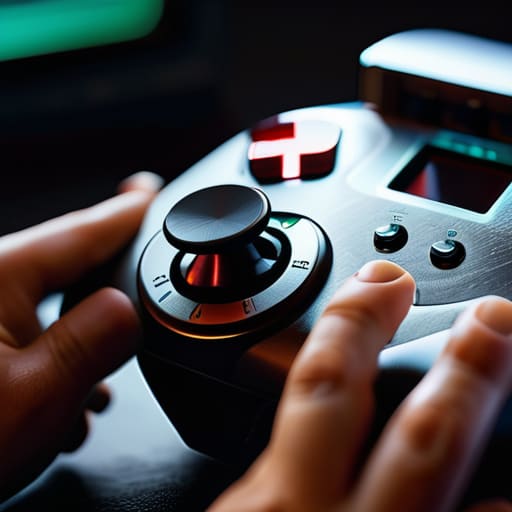
When I’m sitting there, staring at my own build’s code, I realize how easy it is to treat the player’s hands as a constant. You assume their fingers are long enough, their grip is strong enough, and their joints don’t ache after three hours. But when you implement software-based button remapping, you aren’t just adding a “convenience” feature; you’re giving the player the ability to rewrite the physical dialogue between their body and your game. It turns a rigid, one-size-fits-all command into a conversation.
If a player has to fight their own anatomy to hit a specific combo, the game stops being about skill and starts being about endurance. By allowing for customizing controller layouts, you’re effectively removing the friction that turns a fun session into a chore. It’s the difference between a player thinking, “I need to time this dodge,” and thinking, “I hope my thumb doesn’t cramp before I can reach that button.” One is a gameplay loop; the other is just a slow leak in your player retention.
The Cost of Forcing a Single Rigid Control Scheme

When a developer locks down their control scheme, they aren’t just “preserving the intended experience”—they’re issuing a command. That command says: “Play exactly how we imagined, or don’t play at all.” It’s a massive oversight that ignores the reality of how people actually interact with software. By refusing to allow for customizing controller layouts, you aren’t just being stubborn about your UI; you are actively creating a barrier for anyone who doesn’t have the exact hand shape or dexterity the lead designer possessed during the alpha build.
The real cost shows up in the friction. When players are forced into a rigid setup, you aren’t just testing their skill; you’re testing their physical endurance. For players using accessible gaming hardware or those who need to shift button clusters to avoid repetitive motion, a locked scheme is a hard “no entry” sign. It’s the difference between a game that feels like an extension of the player and a game that feels like a chore. If your system forces a player to fight their own hands just to cast a spell, you haven’t built a challenge—you’ve built a mechanical wall that most people will eventually just walk away from.
The Designer’s Checklist: How Not to Mute Your Players
- Don’t just offer remapping; offer layers. If a player has to toggle through three sub-menus just to move a jump command, you aren’t giving them agency, you’re giving them homework. A good system should feel like an extension of their hands, not a negotiation with a spreadsheet.
- Respect the “muscle memory” competition. Every time you lock a keybind, you aren’t just forcing a control scheme; you are forcing the player to compete with every other game they’ve played for the last decade. If your “innovative” layout fights their instinctual twitch, they won’t learn your game—they’ll just get frustrated and Alt-F4.
- Accessibility isn’t a DLC feature, it’s the foundation. When you omit remapping, you are effectively writing a sentence that says “this game is only for people with two working hands and standard dexterity.” That is a massive, expensive mistake that shrinks your potential player base before they even hit the title screen.
- Test your binds against the “chaos factor.” I’ve seen devs design perfect layouts in a vacuum, only to realize that once a player starts using a specialized controller or a macro-pad, the whole system breaks. Build your input logic to be modular, or prepare to spend your entire post-launch cycle reading angry forum posts about “unplayable” controls.
- Watch what your binds say about your combat pacing. If your most vital, frame-perfect ability is buried behind a complex modifier key, you are telling the player that precision is a chore rather than a skill. The most important actions should always be the easiest to reach, or you’re just designing a game that rewards clicking menus instead of reacting to gameplay.
The Final Sentence

At the end of the day, input remapping isn’t some niche accessibility checkbox or a “nice-to-have” feature for the hardcore crowd. It is a fundamental part of the conversation between the developer and the player. When you lock down a control scheme, you aren’t just protecting your “vision”; you are telling the player that their physical reality—their specific mouse, their hand size, or their need for a specialized controller—is an inconvenience to your design. We’ve seen it a thousand times in MMOs: a rigid control set turns a game about exploration into a game about fighting the interface, and once a player starts fighting the buttons instead of the bosses, you’ve already lost them to a game that actually respects their agency.
As I sit here staring at my own half-finished project, I’m constantly reminded that every line of code is a choice about how much freedom I’m willing to grant. I’d much rather build a system that is slightly more complex to implement but allows for a thousand different ways to play, than a “perfect” system that only works for one specific type of person. We need to stop treating player input as a solved problem and start treating it as a dynamic dialogue. If you want people to inhabit the worlds you build, you have to give them the tools to actually touch them on their own terms.
Frequently Asked Questions
If a developer implements remapping but makes the UI so clunky that it takes twenty minutes to set up, is that still a "sentence" of respect for the player?
No, it isn’t. If you give me the option to remap but hide it behind a UI that feels like navigating a spreadsheet from 1998, your sentence just changed. It went from “we respect your agency” to “we gave you the tool, but we’re going to make you pay a tax to use it.” It’s a hollow gesture. You haven’t actually granted freedom; you’ve just added a chore to the onboarding process.
At what point does giving players too much control over their inputs stop being "agency" and start becoming a way for them to break the intended mechanical rhythm of the game?
It stops being agency the moment the designer’s “sentence” becomes unreadable. If I design a rhythm-based combat system where timing is everything, but you remap a complex sequence to a single macro or a much more comfortable keybind, you aren’t playing my game anymore—you’re bypassing the friction I built to create the challenge. When the input becomes too easy, the mechanical tension evaporates, and suddenly, I’m not balancing a game; I’m just watching someone exploit a workaround.
How much of the pushback against rigid control schemes is actually about accessibility, and how much is just players wanting to optimize their setups for high-level play?
It’s both, but they’re actually the same sentence. When a pro player demands a remap to shave three milliseconds off a rotation, they’re fighting for agency. When a player with a specialized controller demands it to simply participate, they’re fighting for the same thing. If your game says “this is the only way to play,” you aren’t just excluding people with disabilities; you’re telling the person who wants to master your mechanics that you don’t trust them to do it.

