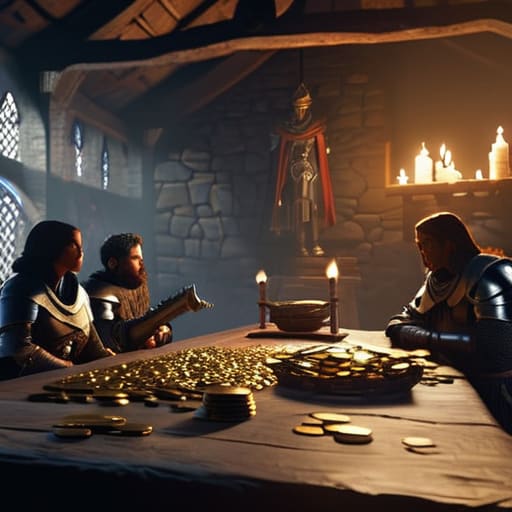
Guild Drama Is Almost Always About Loot or Attendance
People love to blame guild drama on “toxic personalities” or that one guy who won’t stop spamming the wrong rotation in Discord. It’s a convenient lie. It lets us pretend that if we just find the right players, the chaos will stop, but that’s a total fantasy. I spent four years moderating a forum for a mid-sized MMO, and I can tell you that how guild drama starts almost never begins with a bad attitude; it begins with a bad system. It starts when a designer builds a loot table that rewards individual greed or a guild bank permission screen that accidentally invites suspicion. You aren’t dealing with a personality crisis; you’re dealing with a mechanical failure that is forcing your friends to act like strangers.
I’m not here to give you a lecture on “conflict resolution” or some HR-approved guide to being a better leader. I’ve built my own game, and I’ve watched my own systems tear apart the communities I worked so hard to foster. I want to show you the actual design sentences that are inadvertently telling your members to betray one another. We’re going to look at the specific, structural cracks—from loot distribution to officer hierarchies—that turn a cohesive raid team into a digital battlefield.
Table of Contents
Unfair Loot Distribution Causes When Systems Betray Trust
Unfair Loot Distribution Causes: When Systems Betray Trust
Most people think loot drama is about greed, but it’s usually about a mismatch between expectations and the math. When a designer builds a loot table that relies on pure RNG, they aren’t just introducing variance; they are introducing a gamble on social cohesion. If your guild spends three hours fighting a boss only for the legendary drop to go to the guy who hasn’t logged in for a week, the system has just told your active players that their time is worth less than luck. This is one of the most common unfair loot distribution causes I see, and it turns a shared victory into a resentment engine.
When you leave rewards to chance without a fallback, you aren’t just playing a game; you’re managing a high-stakes economy where the currency is player goodwill. If the system doesn’t reward consistent contribution, you’ll see gaming group toxicity signs emerge almost immediately—people stop talking in Discord, they stop helping with consumables, and they start looking for the exit. You can’t fix a broken social contract with a “sorry” in general chat; you have to fix the sentence the loot table is writing.
The Permission Screen as a Weapon in Mmo Guild Management Issues
Most people look at a guild bank permission screen and see a boring administrative menu. I see a set of instructions for how much power a leader is willing to delegate before they start getting paranoid. When you’re dealing with MMO guild management issues, the “Officer” rank is rarely just a title; it’s a loaded weapon. If you give too much access too early, you’re essentially telling your officers that the guild’s resources are their personal slush fund. I’ve seen dozens of small, tight-knit groups implode because a trusted lieutenant decided that “emergency repairs” actually meant “buying a new mount.”
The real danger, though, is when the settings are too restrictive. When a leader locks down every single item and permission, they aren’t just being “careful”—they are sending a signal that they don’t trust anyone. This is where social dynamics in multiplayer games get messy. You end up with a leadership tier that feels like a bottleneck, and a general membership that feels like they’re just unpaid interns. You can try to fix the tension with a long Discord chat, but you can’t patch the fact that your design choices have turned your officers into either thieves or subordinates.
Five Ways Your Design Choices Are Setting Your Guild on Fire
- Stop treating social friction like a bug; it’s a feature of your mechanics. If your loot system rewards individual luck over group effort, you aren’t building a team, you’re building a room full of competitors who just happen to be wearing the same tag.
- Audit your “convenience” features. Every time you add a shortcut—like an automated way to split gold or a simplified trade window—you’re stripping away the small, manual moments of negotiation where players actually build social capital and trust.
- Recognize that “silent” systems are the loudest. When a guild leader stops explaining why a decision was made, the vacuum isn’t filled with understanding; it’s filled with players projecting their own worst fears about the economy, and that’s where the resentment starts.
- Watch out for the “Efficiency Trap.” If your guild’s only shared goal is hitting a specific gear score or clearing a raid in record time, you’ve created a system where any player who slows down is seen as a broken component rather than a person, and people hate being treated like broken code.
- Check your communication hierarchy against your actual power structure. If your game gives massive power to a single officer but provides zero mechanical way for the rest of the guild to audit their actions, you haven’t built a hierarchy; you’ve built a pressure cooker.
The Designer's Responsibility

At the end of the day, guild drama isn’t some unpredictable lightning strike; it’s the predictable result of a design mismatch. When you pair a high-stakes loot system that rewards individual greed with a social structure that demands collective sacrifice, you aren’t just making a game—you are engineering a conflict. Whether it’s a poorly configured permission screen that turns a trusted officer into a thief, or a loot table that makes a week of raiding feel like a waste of time, these mechanics are the silent architects of resentment. If your systems tell players to compete for resources while simultaneously asking them to build a community, you shouldn’t be surprised when that community eventually burns down.
If you’re a player, my advice is to watch the systems, not just the people. If the game feels like it’s constantly pushing you to doubt your allies, it probably is. But if you’re a developer—or even just a solo dev like me trying to figure out how to code a simple inventory system without breaking a friendship—remember this: every mechanic is a choice about how much friction you want to introduce into human relationships. Design with the intention of supporting the social contract, not testing its breaking point. A game shouldn’t just be about the math of the stats; it should be about making sure the math doesn’t destroy the magic of playing together.
Frequently Asked Questions
If the systems are the problem, can a designer actually build a "drama-proof" guild structure, or is conflict just an inevitable part of the social economy?
Look, you can’t build a “drama-proof” system any more than you can build a game without friction. Friction is where the gameplay happens. If you remove all conflict, you just have a spreadsheet where people click buttons in unison. The goal isn’t to kill drama; it’s to make sure the drama is actually about the players’ choices, not a bug in your math. You want players fighting over strategy, not fighting because your loot table turned them into thieves.
How do you balance giving players agency with the risk of creating "permission loopholes" that let one toxic person wreck an entire raid group?
You’re trying to balance freedom against catastrophe, but you have to realize that “agency” is often just a polite word for “unfiltered access.” If you give a player the power to bypass a check, you aren’t just giving them agency; you’re giving them a tool to dismantle your social contract. The trick isn’t finding a perfect middle ground—it’s designing systems where the cost of abuse is immediate and mechanical, not just a moderator’s headache.
When a loot system fails, how do you distinguish between a genuine mechanical flaw and just a group of people being inherently selfish?
It’s easy to blame “toxic players,” but you have to look at the incentive structure first. If the system rewards the loudest person or the one who rolls highest regardless of contribution, you haven’t built a community; you’ve built a hunger games arena. If people act selfishly, ask yourself: did I design a system that requires them to be selfless to win? If the answer is no, it’s not a people problem—it’s a design flaw.

