Structured Pvp Solves Fairness and Loses Stakes
I spent three years moderating a guild forum where the most heated, midnight-fueled arguments weren’t about gear scores or class balance, but about why the matchmaking felt like it was actively trying to ruin their lives. Most people try to explain the difference between PvP modes using dry, technical jargon about player counts or map sizes, but they miss the point entirely. When you look at how battlegrounds and arenas differ, you aren’t just looking at different maps; you’re looking at two different sets of instructions being shouted at you by the developers. One mode wants you to manage a chaotic, shifting social ecosystem, while the other wants to strip away everything until you are nothing but a reaction engine for mechanical perfection.
I’m not here to give you a Wikipedia summary or a guide on which buttons to press. I want to talk about the intent behind the design—the actual sentences the developers are writing when they force you into these different loops. I’ll break down the psychological cost of each mode and why your brain feels completely different after an hour of each. By the end of this, you’ll understand why you’re actually playing, and more importantly, what the game is asking of you when it drops you into the fray.
Table of Contents
The Battleground a Map Design Difference of Chaos
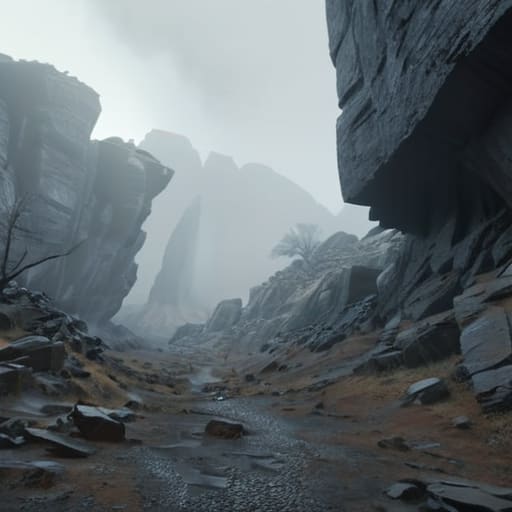
When you look at a battleground map, you aren’t looking at a stage; you’re looking at a series of friction points. The designers aren’t trying to facilitate a perfect duel; they are trying to force you to navigate a landscape of unpredictable variables. Whether it’s a choke point near a capture flag or a high-ground ridge that offers a view of the entire valley, the map design differences here are all about creating “noise.” In a battleground, the designer is essentially saying: “I want you to feel overwhelmed, and I want you to rely on your teammates because you cannot see what is behind that next rock.”
This is where the core game loop analysis gets interesting. In an arena, the map is a vacuum designed to strip away everything but your mechanical skill. But in a battleground, the map is a participant. It dictates the flow of combat through physical constraints that force players into clusters. You aren’t just fighting the enemy team; you are fighting the terrain, the line-of-sight issues, and the sheer chaos of a dozen people trying to occupy the same three-meter radius. It’s messy, it’s loud, and it’s designed to make sure nothing ever feels settled.
Player Engagement Strategies via the Long Game Loop
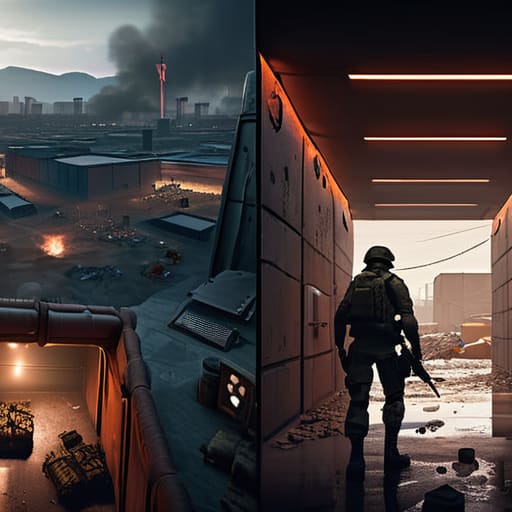
If a battleground is a marathon through a crowded city, the arena is a sprint in a padded room. This is where the player engagement strategies diverge most sharply. In a battleground, the designer is betting on your ability to navigate friction. They want you to manage resources, control territory, and survive the “dead time” between skirmishes. The game loop here is built on the idea that momentum matters more than perfection. You aren’t just fighting players; you are fighting the map, the distance between objectives, and the sheer exhaustion of a twenty-minute engagement.
Arenas, however, strip away the scenery to focus entirely on the purity of the PvP combat mechanics. When you strip away the terrain, you aren’t just simplifying the game; you are changing the sentence the designer is writing. In an arena, the sentence is: “We want to see if you can execute under pressure.” There is no room for the “long game” or tactical retreats. It’s a high-frequency loop where the competitive matchmaking systems have to work overtime because a single mistake isn’t just a setback—it’s a death sentence. One asks for your endurance; the other asks for your precision.
The Designer’s Intent: 5 Lessons in Control and Chaos
- Stop treating them as the same mode; an arena is a conversation about micro-interactions, while a battleground is a lecture on macro-strategy. If you try to balance an arena like a battleground, you’ll end up with a game that feels like a math equation with no soul.
- Watch what the map says about the player’s time. A battleground map says, “I want you to get lost in the flow of the objective,” whereas an arena map says, “I want you to know exactly where every threat is at all times.” If your arena has too much “noise,” you aren’t creating chaos—you’re just creating frustration.
- Understand the social cost of the loop. Battlegrounds are the “guild hangout” of PvP; they allow for social friction and group cohesion. Arenas are high-stakes social pressure cookers. When an arena player fails, they aren’t just losing a match; they are failing a three-person social contract. Design the stakes accordingly.
- Respect the attention economy. An arena is competing with a high-intensity Twitch stream for your focus; it needs to be tight, fast, and punishing. A battleground is competing with a podcast or a second monitor; it needs enough mechanical “meat” to keep you engaged without requiring the focus of a neurosurgeon.
- Look at the loot, not just the skill. If your battleground rewards are tied to “participation,” you’re telling players that showing up is enough. If your arena rewards are tied to “winning,” you’re telling them that perfection is the only way to play. Both are valid sentences, but don’t mix the grammar.
The Designer’s Intent
At the end of the day, choosing between a battleground and an arena isn’t just about picking a game mode; it’s about deciding which kind of player you want to cultivate. When you design a battleground, you are building a machine for social friction and emergent chaos, hoping players find meaning in the messy, unscripted skirmishes that happen between objectives. When you build an arena, you are stripping away the noise to see if your mechanics can actually stand up to the heat of a microscope. One is a sprawling, unpredictable epic; the other is a high-stakes conversation about pure skill. If a designer confuses the two—if they try to make an arena feel like a massive war or a battleground feel like a tight tactical duel—they end up saying nothing at all.
As someone currently staring at a half-finished combat loop in my own project, I’ve learned that you can’t have it both ways. You have to decide what sentence you are trying to write. Are you asking the player to master the system, or are you asking them to survive the community? Both are valid, and both are beautiful when they work, but the moment you lose sight of that distinction, your players will feel the dissonance. Don’t just build a mode because it fills a slot in a menu; build it because you know exactly what you’re asking the player to become.
Frequently Asked Questions
If battlegrounds are about the "long game loop," how do designers prevent that loop from just turning into a mindless, repetitive grind that players eventually resent?
You prevent the grind by making the loop about agency, not just endurance. If the player is just clicking a button to watch a progress bar move, you’ve failed; you’ve just built a second job. Designers have to inject “micro-decisions”—shifting objectives, terrain changes, or unexpected player clusters—that force you to re-evaluate the map every sixty seconds. You want a loop that feels like a series of tactical problems, not a treadmill.
At what point does the mechanical precision of an arena stop being "skill" and start being a barrier to entry that kills the player base?
It stops being skill the moment the “correct” way to play becomes the only way to play. When a single mistake in a rotation or a pixel-perfect movement error results in an instant, unrecoverable loss, you aren’t testing player agency anymore—you’re testing their ability to memorize a script. At that point, the arena isn’t a contest of wits; it’s a barrier that tells new players, “You don’t belong here unless you’ve already mastered us.”
Can a game actually bridge the gap between these two, or are you always going to be fighting for two completely different types of player attention?
You can try, but you’re usually just building a Frankenstein’s monster. When you try to bridge them, you end up with “semi-competitive” modes that satisfy nobody. You’re trying to force a player to care about a macro-scale objective while simultaneously demanding the micro-scale mechanical precision of an arena. It’s like trying to write a sentence that is both a frantic scream and a calm whisper. You end up with a muddled signal that fails to command either type of attention.

