
Pacing: Where to Let the Player Breathe
I spent three months of my life building a combat loop for my current project, convinced that if I just tweaked the cooldown timers by another 0.5 seconds, I’d have mastered the art of flow. I was wrong. I was treating pacing like a math problem to be solved with spreadsheets, when in reality, how pacing is controlled isn’t about the numbers on a spreadsheet—it’s about the emotional exhaustion of the person holding the controller. Most developers think they’re managing time, but they’re actually managing tension, and when you get that wrong, you aren’t making a challenge; you’re just making a chore.
I’m not here to give you a lecture on systemic variables or some academic breakdown of “engagement loops.” I’ve made too many expensive mistakes in my own solo dev journey to pretend I have a magic formula. Instead, I want to talk about the actual levers you pull to keep a player from checking their phone. We’re going to look at the friction points, the reward rhythms, and the quiet ways a designer tells a player to breathe or to sprint, and why most of them end up accidentally telling the player to quit.
Table of Contents
Building Dramatic Tension Through Structural Beats

When you look at structural beats in writing, you aren’t just looking at plot points; you’re looking at the heartbeat of the player’s experience. If a questline is just a string of “Go here, kill that, come back,” you aren’t building tension—you’re just asking the player to perform chores. To actually manage story momentum, you have to treat the gameplay loop as a way of controlling the player’s pulse. You need those moments where the action slows down, forcing a breath, only to tighten the screws again.
The real trick lies in the friction between scene vs summary pacing. If I spend twenty minutes of real-time gameplay on a single dialogue exchange, I’m telling the player this moment is heavy. But if I follow that up with a massive, high-stakes boss fight that feels exactly the same in terms of mechanical intensity, I’ve lost them. You have to understand that building dramatic tension is often about what you choose not to let the player do. If you give them constant, high-octane stimulation, you aren’t creating excitement; you’re just creating noise that they’ll eventually tune out.
Managing Story Momentum Without Breaking the Players Flow
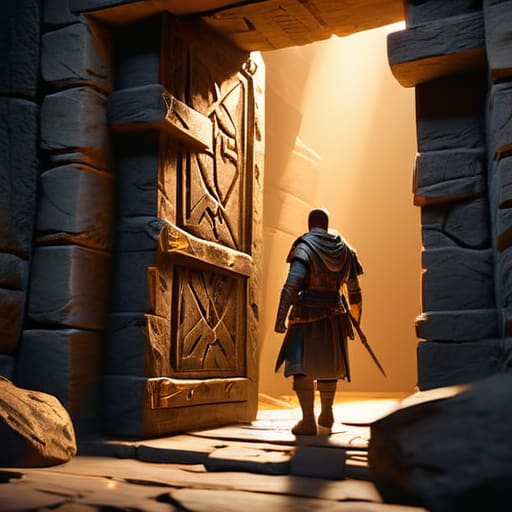
The biggest mistake I see in indie RPGs is the “monologue wall.” You’ve just finished a massive boss fight, your adrenaline is spiking, and you’re ready to see what’s behind the next door—and then the game forces you into a twenty-minute unskippable cutscene. That isn’t storytelling; it’s a speed bump. When you’re managing story momentum, you have to realize that the player’s agency is a finite resource. If you stop them dead in their tracks to dump lore, you aren’t building tension; you’re just competing with their desire to actually play the game.
The trick is mastering the balance between scene vs summary pacing. You want the heavy, interactive moments where the player’s choices actually feel like they matter, but you need to learn how to compress the “boring” connective tissue. Instead of a long walk through a forest to deliver a quest, use environmental storytelling or brief, snappy dialogue during the travel. If you treat every narrative beat like it needs to be a cinematic masterpiece, you’ll end up with a game that feels like a series of disconnected, exhausting chores rather than a cohesive journey.
Five Ways to Stop Accidentally Telling Your Players to Log Off
- Respect the “Empty Space” between the beats. If you go from a world-ending boss fight straight into a three-hour fetch quest, you aren’t giving them a breather; you’re telling them the tension was a lie. You need low-stakes downtime that actually feels like rest, not a chore designed to pad the playtime.
- Watch out for the “Loot Vacuum.” When you tie your pacing to gear progression, the player’s attention isn’t on your story or your world—it’s on the math of the next drop. If the grind for a better sword takes longer than the emotional arc of the quest, the math wins, and your narrative momentum dies.
- Don’t mistake “more stuff” for “more pace.” Adding more enemies to a room doesn’t increase tension; it just increases the noise. Real pacing is about the rhythm of the decision-making—knowing when to let the player feel powerful and when to make them feel like they’re barely holding on.
- The UI is a pacing killer. If a player has to navigate five sub-menus just to check their cooldowns during a high-intensity moment, you’ve broken the sentence. Every click is a moment where the player is forced to stop being a hero and start being a data entry clerk.
- Be honest about your “Stop” commands. If you have a mandatory cutscene or a long travel segment, don’t pretend it’s “part of the journey” if it’s actually just a way to let the server catch up. If you’re going to force a player to slow down, make sure the payoff is worth the interruption, or they’ll just start checking their phone.
The Designer's Rhythm
At the end of the day, pacing isn’t some abstract mathematical curve you plug into a spreadsheet; it’s the heartbeat of the player’s experience. We’ve looked at how structural beats create tension and how story momentum keeps them from drifting, but the reality is that every single mechanic you implement is a rhythmic choice. If your combat is high-octane but your questing feels like wading through wet concrete, you aren’t just creating a “slow patch”—you are sending a message that the player’s time isn’t worth the effort. You have to realize that every downtime, every loot drop, and every cutscene is a sentence in a larger conversation about whether the player should stay or walk away.
I’ve spent too many nights staring at my own messy code, realizing I’d accidentally built a game that tells the player to go take a nap instead of go on an adventure. It’s a hard lesson to learn, but once you start seeing systems as rhythms rather than just numbers, the design changes. Don’t just build mechanics that work; build mechanics that breathe. If you can master that pulse, you stop being someone who just manages variables and start being someone who actually tells a story. Stop trying to optimize the grind and start trying to master the flow.
Frequently Asked Questions
How do you stop a "pacing break" from feeling like a chore when you're forced to slow down for a mandatory story beat?
You stop it by making the “slow” part feel like a choice, even if it isn’t. If a mandatory cutscene or a slow dialogue tree feels like a chore, it’s because the designer stopped asking the player to do anything. You’ve essentially told the player: “Sit there and shut up.” Instead, give them something to manage—a small tactical decision, a way to interact with the environment, or a meaningful dialogue choice. If the player is still “writing” their own story through small actions, the rhythm holds. If you just turn them into a spectator, you’ve broken the sentence.
At what point does a slow burn stop being "atmospheric" and just start being a boring grind that's competing with the player's desire to actually play the game?
It stops being atmosphere the second the player stops thinking about the world and starts thinking about the clock. Atmosphere is when the slow pace makes you feel the weight of the setting; a grind is when the pace makes you feel the weight of your own time being wasted. If the player is checking their phone or calculating how many more mobs they need to kill to hit a threshold, you aren’t building tension—you’re just competing with their real life.
If every mechanic is a sentence, how do you prevent a high-intensity combat loop from accidentally telling the player that the quiet, narrative moments are just wasted time?
You have to stop treating them like different languages. If your combat loop is a frantic, high-octane heavy metal track and your narrative beats are a silent film, you haven’t built a game; you’ve built a series of interruptions. The quiet moments need to be the “recharge” sentence that makes the combat possible. If the downtime doesn’t provide the emotional or mechanical setup for the next fight, you aren’t pacing—you’re just wasting their time.

