Telling a Story With No One Speaking
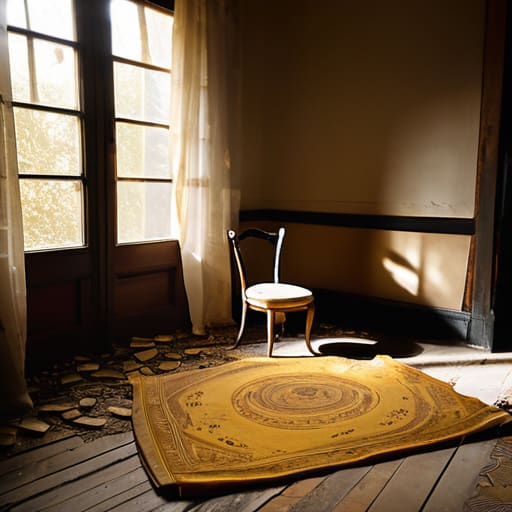
I spent three weeks last year trying to build a “haunted” bedroom for my own project, and I ended up with nothing but a pile of expensive, high-poly assets that felt like a museum exhibit rather than a lived-in space. Most design blogs will try to sell you on this idea that environmental storytelling is about high-fidelity textures or cinematic lighting, but that’s a lie. They make it sound like a technical hurdle when, in reality, understanding how environmental storytelling works is actually about intent. If you just scatter bloodstains and broken chairs around a room because “horror is spooky,” you aren’t telling a story; you’re just creating visual noise that competes with the player’s actual goal of finding the exit.
I’m not here to give you a lecture on asset density or shader complexity. I want to talk about the sentences you’re writing with your level design. I’m going to break down how to use small, cheap, and sometimes even ugly details to communicate a history that your dialogue system was too lazy to write. I’ve made the mistake of over-designing my way into a vacuum, and I want to show you how to avoid that expensive clutter so your world actually says something meaningful to the person playing it.
Table of Contents
Visual Storytelling Techniques That Replace Empty Dialogue
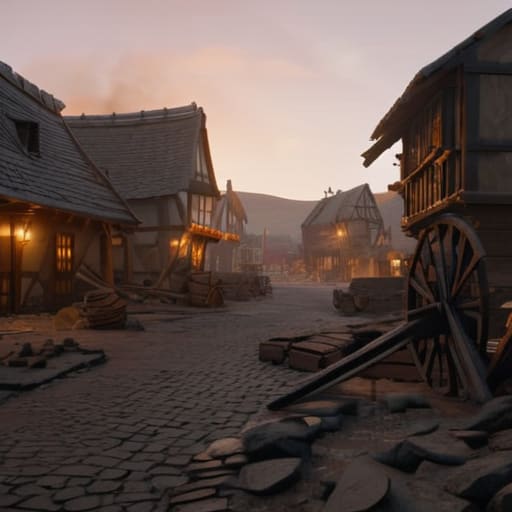
When you’re building a world, dialogue is often the easiest way to dump information, but it’s also the fastest way to kill momentum. If a player has to stop mid-combat to read a three-paragraph text box from a dying NPC just to understand why the village is on fire, you’ve failed. Real narrative design in video games isn’t about what characters say; it’s about what the player notices when they stop running. Instead of a cutscene explaining a siege, show me a shattered catapult lodged in a tavern wall. That single piece of asset placement for narrative tells the player everything they need to know about the scale and direction of the attack without a single line of scripted dialogue.
The goal is to use visual storytelling techniques to create a sense of “lived-in” history. If I walk into a room and see a dinner table with half-eaten food and a chair knocked over, I don’t need a quest log telling me something went wrong. I feel the suddenness of the interruption. You’re essentially using the environment to ask the player questions, forcing them to piece together the “why” through observation rather than instruction. That’s where the real immersion happens.
Asset Placement for Narrative When Objects Speak

When you’re placing assets in a level, you aren’t just decorating a room; you’re setting a trap for the player’s curiosity. If I put a single, overturned chair next to a spilled potion in my own build, I’m not just filling space. I’m asking the player to hypothesize. They see the chair and the spill, and suddenly they aren’t just walking through a corridor—they’re investigating a struggle. This is the core of asset placement for narrative. If the objects don’t suggest a sequence of events, they’re just clutter, and clutter is just noise that competes with the actual gameplay for the player’s limited mental bandwidth.
The mistake I see most often in big-budget titles is treating objects like static museum exhibits rather than evidence. Effective world building through level design requires you to think about the momentum of the objects. A skeleton slumped over a treasure chest tells a story of greed; a skeleton slumped over a barricade tells a story of sacrifice. One is a loot prompt, the other is a tragedy. If you don’t differentiate those through careful placement, you’re essentially shouting at the player instead of letting them discover the truth for themselves.
The Designer’s Subtext: 5 Rules for Not Wasting Your Players' Eyes
- Stop treating props like set dressing. If you place a broken chair next to a spilled potion, you aren’t just “decorating” a room; you’re telling the player a fight happened here. If that chair doesn’t imply a struggle, you’ve just added visual noise that’s competing for the player’s attention instead of feeding the narrative.
- Respect the player’s intelligence by leaving gaps. The best environmental stories are the ones where the player has to connect the dots themselves. If you explain everything through a floating UI text box, you’ve killed the mystery. Give them the bloodstain and the empty holster, then let them realize the character fled—don’t tell them they fled.
- Consistency is your only defense against immersion breakage. If your world tells a story of a famine through empty grain silos, but then you place a pristine, overflowing fruit basket in the corner because it “looks good,” you’ve just lied to your player. You’ve broken the sentence you were trying to write.
- Use lighting as a narrative guide, not just a mood setter. A single flickering lamp in a dark hallway isn’t just “spooky”—it’s a sentence that says, “Look here, something important happened in this corner.” If your lighting doesn’t direct the player’s eye toward the story you’re trying to tell, you’re just wasting GPU cycles.
- Watch out for “Loot Logic” ruining your world-building. I see this in every mid-tier MMO: a terrifying, ancient dragon’s lair that is somehow filled with neatly organized, low-level vendor trash. If the items in a room don’t make sense within the context of who lived there, the player stops seeing a story and starts seeing a treasure chest with a skin.
The Cost of a Silent Room

At the end of the day, environmental storytelling isn’t about how many high-fidelity assets you can cram into a dungeon; it’s about the intent behind every single one. We’ve looked at how careful asset placement can replace a clunky, ten-minute dialogue tree, and how a well-placed bloodstain can communicate more about a boss fight than a loading screen tip ever could. If you treat your world like a collection of static decorations, you’re wasting your players’ time and their attention—which is already being pulled away by their phones or a Discord notification. When you get it right, you aren’t just decorating a level; you are writing a silent dialogue between the game and the person holding the controller.
As someone who spends too much time staring at my own broken code and half-finished maps, I know how tempting it is to just fill space because “it looks better.” But remember: every object in your world is a sentence. If you leave a chair overturned in a corner, you better have a reason for that sentence to exist, or you’re just creating narrative noise. Stop trying to tell players exactly what happened through cutscenes, and start trusting them to piece the puzzle together themselves. That moment of realization—the second a player looks at a discarded note and finally understands why the village is empty—is the most rewarding mechanic you will ever design.
Frequently Asked Questions
How do you stop environmental storytelling from becoming just "clutter" that slows down the player's actual gameplay loop?
The trick is realizing that every piece of “story” is competing with the player’s actual goal. If a player is mid-raid and they have to navigate a graveyard of discarded armor just to reach a boss, you haven’t told a story; you’ve just built a speed bump. You have to treat environmental storytelling like a waystation, not a detour. If it doesn’t reinforce the gameplay loop or provide a meaningful beat between actions, it’s just expensive clutter.
At what point does a scene go from being a "cleverly placed asset" to being an unintentional distraction from the main mechanics?
It happens the moment the player stops looking at the loot and starts looking at the clutter. If I’m trying to teach you a boss mechanic—say, a telegraph for a heavy slam—and there’s a pile of dramatic, lore-heavy skeletons blocking your view of the floor indicators, I’ve failed. I’ve stopped communicating game state and started shouting noise. If the “story” competes with the “instruction,” the player will eventually resent the world for being loud.
If I'm building a small game alone, how do I know if my environmental cues are actually communicating something, or if I'm just shouting into a void where no one is reading the room?
You have to stop looking at your level editor and start looking at your telemetry. If you’re building alone, you can’t rely on “vibes.” Look at player heatmaps: are they actually pausing at that bloodstained desk, or are they sprinting past it to hit the next combat trigger? If they aren’t stopping, your “sentence” is gibberish. Sometimes the best test is a blind playtest where you ask, “What happened here?” If they guess wrong, your assets are just clutter.

