
When the Servers Go Off, What Did You Buy
I remember sitting in my darkened bedroom at fourteen, watching the “Connection Lost” icon flicker on a screen that represented three years of my life. It wasn’t just a technical error; it was a funeral. People love to talk about server shutdowns like they’re just a logistical footnote in a business report, but they miss the point entirely. They focus on the lost revenue or the technical debt, when the real tragedy is how server shutdowns kill games by deleting the social fabric that made the software worth running in the first place. When the lights go out, you aren’t just losing a piece of code; you’re losing the guild halls, the unspoken rivalries, and the digital history that no patch note can ever restore.
I’m not here to give you a corporate post-mortem or a lecture on cloud infrastructure. I want to talk about the human cost of a dead login screen. Drawing from my time moderating forums and my own messy attempts at solo dev, I’m going to break down the mechanics of why these endings feel so violent. We’ll look at why certain design choices make a shutdown feel like a betrayal, and what developers should have been saying with their systems before the silence set in.
Table of Contents
The Live Service Lifecycle and the Death of Intent

The problem with the live service game lifecycle is that it treats players like subscribers to a feeling rather than owners of a product. When you buy a single-player game, you own a book; when you buy into a live service, you’re essentially renting a seat at a table that the host can flip at any moment. Designers start with a vision—a specific rhythm of play, a way for communities to bond—but that vision is entirely dependent on the server staying upright. The moment the business math shifts, the end of life software service becomes an inevitability, and suddenly the “sentence” the developer was writing mid-way through becomes a fragment.
This is where the gap between client-side vs server-side architecture becomes a tragedy. You might have the game files sitting on your hard drive, but without that central heartbeat, your client is just a hollow shell. It’s a ghost ship. We talk a lot about the preservation of online multiplayer games, but we rarely talk about the betrayal of intent. A developer might design a complex social economy intended to last a decade, but if they can’t keep the lights on, that entire social architecture collapses into nothingness. The design wasn’t just killed; it was erased.
Client Side vs Server Side Architecture Building on Sand

When I was messing around with my first solo project, I learned the hard way that you can build the most beautiful interface in the world, but if the brain isn’t there, it’s just a hollow shell. This is the fundamental trap of client-side vs server-side architecture. In a modern MMO, your computer is just a glorified remote control. It’s responsible for the graphics, the sound, and the “feel” of the controls, but the actual truth of the world—where you are, what you own, and whether that boss actually died—lives on a server owned by someone else.
This creates a massive, structural vulnerability. When a company decides a title has reached its end of life software service stage, they aren’t just stopping updates; they are amputating the game’s logic. You might still have the game files on your hard drive, but without the server to validate your actions, those files are nothing more than a collection of expensive, unplayable textures. It turns the entire experience into a house built on sand, where the developer holds the only shovel capable of leveling the foundation.
Five Ways to Stop Writing a Death Sentence for Your Players
- Prioritize local-first data whenever possible. If the player’s progress is trapped entirely behind a proprietary server-side wall, you haven’t built a game; you’ve built a rental agreement that can be revoked at any second. Give them a way to keep the “sentences” they’ve written, even if the platform changes.
- Design for the “End of Life” before you even write the first line of code. Most devs treat a shutdown like a failure, but it’s a predictable part of the lifecycle. If you don’t plan for a graceful exit—like a way to export character data or a transition to a community-run server—you’re essentially telling your players that their time was a waste of money.
- Stop competing with “forever games” and start competing with meaningful experiences. If your entire retention strategy relies on a massive, expensive server cluster to keep people grinding, you’re one bad quarter away from a total collapse. Build systems that can stand on their own, even if the multiplayer heartbeat stops beating.
- Treat your community like stakeholders, not just users. When a game starts to fade, the “sentence” the designer usually sends is silence. That silence is deafening. If you’re going to pull the plug, talk to the people who spent three years building guilds in your world. Don’t just let the lights go out while they’re still in the raid.
- Watch out for the “Feature Creep Trap” that bloats your infrastructure. Every new, flashy live-service mechanic is another expensive sentence you have to keep paying to write. If you can’t afford to maintain the complexity of the system you’ve built, you’re just building a more elaborate way to break your players’ hearts later.
The Final Log-off
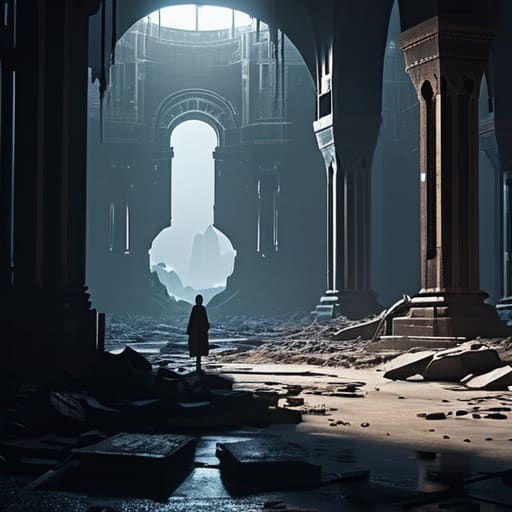
At the end of the day, a server shutdown isn’t just a technical failure or a business decision; it’s the ultimate erasure of a shared language. We’ve looked at how the shift toward live services turned games from finished products into fragile, ongoing conversations, and how building on centralized architecture means players are essentially renting their memories rather than owning them. When the lights go out, the mechanics, the loot tables, and even the social hierarchies we spent years perfecting vanish because the foundation was never truly ours to keep. We aren’t just losing access to software; we are losing the context of our own digital lives.
But maybe there is a lesson here for those of us still building. As someone who spends far too much time staring at my own broken code and half-finished systems, I’ve realized that the best games aren’t necessarily the ones with the most complex economies or the flashiest graphics. They are the ones that respect the player’s time and agency enough to leave something behind. We should be designing systems that feel like enduring legacies rather than temporary rentals. If we want games to survive the inevitable death of a company, we have to start building them with the intention of leaving a mark that doesn’t require a heartbeat from a central server to exist.
Frequently Asked Questions
If a game is built on proprietary tech that only the studio owns, is there ever a realistic way for a community to host its own servers?
Honestly? It’s an uphill battle against a brick wall. When a studio uses proprietary tech, they aren’t just protecting their IP; they’re building a walled garden where the keys are kept in a private vault. Unless they release the server binaries or a dedicated tool, the community is stuck trying to reverse-engineer the “language” the client speaks. It’s like trying to reconstruct a book after the author burned the printing press. It’s possible, but it’s brutal.
How much of a game's "soul" is actually tied to the live server connection versus the local files sitting on my hard drive?
The local files are just the stage props; the server is the play itself. You can have every texture, every sound file, and every line of code sitting on your hard drive, but without the server, you’re just looking at a museum of a dead civilization. The “soul” isn’t in the assets; it’s in the emergent chaos of other players reacting to you. When the connection dies, the script ends, and your files become nothing more than expensive digital paperweights.
At what point does a developer's decision to sunset a game stop being a business necessity and start being a failure of design?
It stops being a business necessity the moment the “exit strategy” ignores the social contract. If you build a game where player agency is tied to a subscription or a proprietary server, you’ve designed a hostage situation, not a service. When a shutdown wipes out non-transferable social capital—guild hierarchies, reputations, or years of collective history—that’s not a pivot; it’s a design failure. You didn’t just close a shop; you burned the town square.

