Asset Packs Without Looking Like an Asset Flip
I remember sitting in my room at 3:00 AM, staring at a prototype that looked less like a cohesive world and more like a digital junk drawer. I had spent eighty bucks on a “highly rated” environment pack, thinking I was buying time, but I was actually buying a visual identity crisis. Every time a player walked from a forest into a dungeon, the lighting shifted, the texel density broke, and the art style screamed that I was a fraud. Most tutorials tell you to just “integrate” them, but they never tell you that if you don’t know how to use asset packs well, you’re actually writing a sentence that says your game is a hollow collection of store-bought parts.
I’m not here to give you a lecture on licensing or how to click “import” in Unity. I want to talk about the invisible cost of convenience. I’ve spent too many months trying to glue mismatched assets together, and I’ve learned that every asset you drop into your engine is a competing demand on the player’s suspension of disbelief. In this post, I’m going to show you how to treat assets like building blocks rather than shortcuts, so you can build something that actually feels like it has a soul.
Table of Contents
The Trap of Presets Maintaining Brand Identity With Compromised Visuals
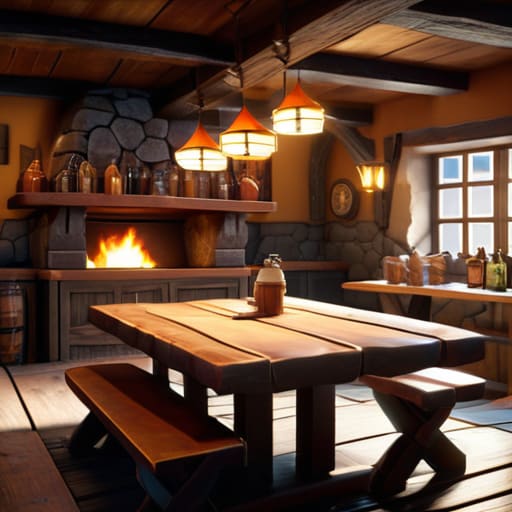
The problem with grabbing a “Medieval Fantasy Pack” and a “Grimdark Environment Pack” and slapping them into the same level is that you aren’t just saving time; you’re creating a visual argument that nobody wins. When you fail at blending multiple asset styles, you’re telling the player that your world doesn’t actually exist—it’s just a collection of store items held together by hope. I’ve seen this in mid-sized MMOs where the hero character looks like a high-fidelity Pixar movie, but the tavern they’re sitting in looks like a mobile game from 2014. That friction is a massive distraction. It pulls the player out of the loop and forces them to realize they are just looking at a software product, not a living world.
If you want to avoid this, you have to treat maintaining brand identity with presets as a process of aggressive subtraction rather than addition. You can’t just drop a model into your scene and call it a day. You need to be modifying digital assets—tweaking the roughness maps, adjusting the color palettes, or even changing the vertex density—until they speak the same language. If you aren’t willing to do that extra work, you aren’t building a game; you’re just curating a catalog.
Asset Pack Curation Techniques Choosing Sentences That Dont Lie
The mistake I see most often isn’t using an asset pack; it’s treating the pack like a finished truth rather than a raw ingredient. When you just drop a high-fidelity fantasy sword into a low-poly stylized world, you aren’t just making a visual error—you’re telling the player that your game’s rules are inconsistent. To avoid this, you need to treat asset pack curation techniques as a filter for your game’s intent. You shouldn’t be looking for “cool stuff”; you should be looking for assets that share the same mathematical DNA as your existing world. If the lighting on a rock model assumes a sun that’s too harsh for your foggy valley, that rock is a lie.
The real work happens in the friction between the pack and your engine. True workflow optimization for designers isn’t about finding the fastest way to fill a scene; it’s about building a pipeline for modifying digital assets so they actually belong there. I’ve learned that if you aren’t willing to spend an hour tweaking a texture or adjusting a shader to match your specific color palette, you shouldn’t be using the asset at all. You have to force those assets to speak your language, or they’ll just keep shouting their own.
The Developer’s Checklist: How to Stop Your Assets From Talking Over Each Other
- Treat every asset pack like a guest in your house; if you just let them walk in and start shouting, your game loses its voice. You need to decide early if you’re going to spend time “re-skinning” the textures or adjusting the lighting to force these disparate pieces into a single, coherent conversation.
- Watch out for the “Loot Table” effect of asset packs—the temptation to just grab everything because it’s cheap. If you include a high-fidelity modular dungeon set next to a low-poly character model, you aren’t being “efficient,” you’re telling the player that your game’s world doesn’t actually exist in one space.
- Use assets to build the foundation, not the facade. I’ve learned the hard way that using a pack to solve a core mechanical problem—like using a generic combat animation pack to hide the fact that your hit detection is broken—is a sentence that says “this game is hollow,” and players will smell that lie instantly.
- Always budget for the “Translation Tax.” If you buy a forest pack, you aren’t just buying trees; you’re committing to the work of making sure your weather system, your foliage shaders, and your lighting settings all speak the same dialect as those trees, or the whole system breaks.
- Curate for the gaps, not the whole. The smartest way to use a pack is to identify the specific, tedious things you hate doing—like making 50 different types of rocks—and using them to fill the silence between the bespoke, hand-crafted pieces that actually define your game’s soul.
The Final Edit
At the end of the day, using an asset pack isn’t about being “lazy”—it’s about deciding where your limited energy actually matters. If you spend your entire development cycle trying to hand-model every single crate and pebble, you’re essentially telling your players that your core gameplay loop is secondary to your scenery. But if you grab a high-quality environmental kit and then spend your time tweaking the lighting, the shaders, and the way those assets interact with your unique mechanics, you’re doing something much smarter. You aren’t just filling space; you are using those assets to build a foundation so you can focus on the sentences that actually matter—the ones that define how your game feels to play.
I’ve spent too many nights staring at a half-finished prototype, realizing I had built a beautiful museum of assets that had no reason to exist together. My advice? Treat every asset you buy like a guest in your world. They need to be vetted, they need to be styled, and they need to earn their place in the narrative you are trying to tell. Don’t let the convenience of a marketplace dictate your game’s identity. Use the tools to save your time, but never let them speak for you. Build your world with intention, even if you’re building it one modular piece at a time.
Frequently Asked Questions
How do I stop my game from looking like a "Unity Asset Flip" while still keeping my dev time focused on actual mechanics?
You have to stop treating assets like a shortcut and start treating them like a palette. An “asset flip” happens when you let the store’s defaults dictate your game’s mood. If you grab a sci-fi pack but your mechanics feel like a cozy farm sim, you’ve just written a sentence that makes no sense. Pick a cohesive visual language, then commit to one “hero” element—a custom shader or a unique lighting setup—that forces those mismatched assets to speak the same language.
Is there a way to mix different asset packs without the visual language feeling like a complete mess?
You have to find a common denominator, and it’s rarely the texture. If you grab a high-fidelity forest pack and pair it with stylized, low-poly buildings, you aren’t making a “unique aesthetic”—you’re telling the player that your world is broken. I usually force everything through a single lighting profile or a shared post-processing layer. It’s like a unifying grammar; it doesn’t matter if the words are different if the tone remains consistent.
At what point does the cost of custom-modeling an asset outweigh the "identity tax" of just using a store-bought one?
It’s a math problem where the variables are your sanity and your player’s memory. You pay the “identity tax” when the asset pack makes your game feel like a generic tech demo—it’s a sentence that says, “I ran out of time.” If the asset is a background prop, buy it and move on. But if it’s a core mechanic, like your main character or a signature spell effect? Model it. If players can’t distinguish your game from a Unity asset flip, you’ve already lost the battle for their attention.

