
Difficulty Is a Conversation, Not a Slider
I spent three nights last week staring at a boss encounter in a niche indie RPG, and I realized I wasn’t actually playing a game—I was just participating in a math equation. Most people think that when a developer talks about how difficulty is designed, they’re talking about skill ceilings or complex patterns, but they’re usually just lying to themselves. In reality, they’re often just cranking up enemy HP pools or damage multipliers because they’ve run out of ideas. When a designer relies on a “bullet sponge” to create tension, they aren’t writing a challenge; they’re writing a sentence that says, “I don’t know how to make this fight interesting, so please just stand there and hit the sponge.”
I’m not here to give you a lecture on theoretical game theory or some academic breakdown of player psychology. I want to talk about the actual mechanics—the ones that force you to make choices, the ones that actually respect your time. I’ll be pulling back the curtain on the messy, often broken ways developers try to manipulate your sense of achievement, drawing from my own expensive mistakes building solo projects and my years watching guild leaders scream at raid bosses. We’re going to look at what these systems are really trying to tell you.
Table of Contents
The Skill Floor Trap When Friction Becomes a Barrier
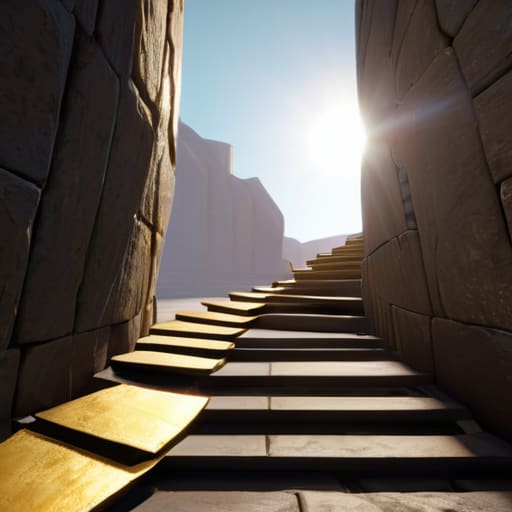
The problem with most developers is that they treat the skill floor like a speed bump when it should be a ramp. They think that by making the basic mechanics punishingly precise or the early-game mobs slightly too tanky, they are setting a standard for excellence. In reality, they are just writing a sentence that says, “If you aren’t already a veteran, go away.” When you confuse a high barrier to entry with meaningful challenge, you aren’t building depth; you’re just killing your player engagement before the first boss even spawns.
I’ve seen this in my own solo builds, too. I’ll spend a week tweaking a combat loop to be “tight,” only to realize I’ve actually just created a massive gap between the skill ceiling vs skill floor. If the baseline requirement to even participate in the loop is a level of mechanical perfection, you haven’t created a challenge—you’ve created an exclusion zone. A well-designed game should invite you in with a gentle hand and then slowly tighten the screws. If the friction is too high at the start, players don’t feel the drive to master the system; they just feel like they’re hitting a brick wall.
Level Design Pacing and the Lie of Constant Tension

The problem with most modern level design is that it treats tension like a faucet you can only turn one way: toward “on.” Designers often fall into the trap of thinking that if the player isn’t actively dodging a fireball or managing a cooldown, they aren’t “playing.” This results in a flat, exhausting line of engagement where the intensity never dips. But if you never let the player breathe, you aren’t building a challenge; you’re just building fatigue.
When I’m working on my own builds, I’m constantly fighting the urge to fill every corridor with combat. Real level design pacing requires the “valley” to make the “peak” actually mean something. If every room is a high-stakes encounter, then nothing is high-stakes. You need those quiet stretches—the long walk through a desolate forest or the tense, silent climb up a crumbling tower—to reset the player’s baseline. Without those lulls, you never actually achieve a true flow state in game design; you just achieve a state of sensory numbness where the player stops reacting to the threat and starts just going through the motions to get to the next waypoint.
Five Ways to Stop Writing Bad Sentences About Difficulty
- Stop using health sponges as a proxy for challenge. When you just inflate a boss’s HP bar because you’re afraid players will breeze through your mechanics, you aren’t designing a test of skill; you’re designing a test of patience. You’re telling the player, “I don’t trust you to learn the patterns, so please just stand there and hit the sponge for ten minutes.”
- Respect the player’s “Decision Budget.” Every time you force a player to manage a complex UI, a heavy inventory, or a confusing menu, you are stealing mental energy away from the actual combat or puzzle. If the difficulty is supposed to come from the boss fight, don’t let it be undermined by the player struggling to remember which button triggers their cooldown.
- Treat “Failure” as information, not a punishment. A well-designed death should be a clear sentence that says, “You missed this specific timing” or “You didn’t bring the right tool.” A bad death—the kind that happens because of a camera glitch or a random one-shot from off-screen—is a sentence that says, “This game is unfair and I don’t care about your progress.”
- Watch out for the “False Choice” in gear progression. If the only way to overcome a difficulty spike is to grind for a specific piece of loot that increases a stat by 5%, you haven’t designed a difficulty curve; you’ve designed a gate. You’re forcing players to trade their time for the ability to actually play the game you built.
- Remember that difficulty is always competing with the player’s social life. Every hour spent stuck on a frustrating, poorly communicated mechanic is an hour the player isn’t spending telling their friends how cool your game is. If the friction doesn’t lead to a “eureka” moment, it’s just noise that’s driving them toward your competitor’s much smoother experience.
The Designer’s Final Sentence

At the end of the day, difficulty isn’t a slider you move from ‘Easy’ to ‘Hard’; it’s a continuous conversation between your mechanics and the player’s agency. We’ve seen how a poorly tuned skill floor can turn a masterpiece into a chore, and how artificial tension in level design can make a world feel claustrophobic rather than epic. When you mess up these systems, you aren’t just making the game “tougher”—you are effectively telling your players that their time is less valuable than your desire to see a high number on a combat log. If the friction doesn’t lead to a meaningful choice or a moment of genuine triumph, you haven’t designed a challenge; you’ve just designed unnecessary work.
As I sit here staring at my own half-finished code, trying to figure out why my latest boss fight feels more like a math homework assignment than a duel, I keep coming back to that one truth: every mechanic is a choice. You have the power to decide whether your game says “try harder” or “think better.” Don’t be afraid to let your players breathe, and don’t be afraid to let them fail in ways that actually teach them something. The best difficulty design doesn’t demand respect through frustration; it earns respect through clarity. Build systems that respect the player’s intelligence, and they’ll stay around long after the grind becomes obsolete.
Frequently Asked Questions
If we stop using enemy health sponges to create difficulty, what actually replaces that sense of scale without making the game feel trivial?
You replace the sponge with consequence. If an enemy doesn’t take forever to kill, they need to be able to end your run in a single mistake. You shift the weight from “how long can I swing this sword?” to “how well can I manage this resource?” It’s the difference between a slog and a dance. You aren’t competing with a timer anymore; you’re competing with the player’s own ability to stay composed under pressure.
How do you design a "hard" system that rewards player knowledge instead of just punishing their lack of time to grind?
You have to stop treating “difficulty” like a health bar slider. If the only way to overcome a wall is to spend ten hours grinding gear, you aren’t designing a challenge; you’re designing a second job. A real hard system uses “knowledge gates.” I want the player to realize, “Oh, I didn’t die because my stats were low, I died because I didn’t see that telegraph.” When the reward is a “eureka” moment rather than a stat boost, you’ve actually built something meaningful.
At what point does a difficulty spike stop being a lesson in mechanics and start being a design failure that drives players to quit?
It stops being a lesson the moment the player stops thinking about the mechanics and starts thinking about the math. A good spike asks, “How do I use my tools differently?” A failure asks, “How many more hits can I take before this sponge kills me?” When the solution to a challenge isn’t a change in behavior, but just more grinding or better gear, the designer has stopped teaching and started bullying. That’s when they quit.

