
Every Expansion Resets What You Earned
I remember sitting in a dimly lit basement back in 2016, staring at a spreadsheet of drop rates for a defunct MMO, trying to figure out why my players were quitting right when they should have been getting hooked. I realized then that most people don’t actually understand how gear treadmills work; they think it’s about the excitement of a new sword, but it’s actually about the math of obsolescence. Designers aren’t just giving you loot; they are building a sophisticated engine of planned frustration, carefully calibrating the gap between what you have and what you need so you never feel quite powerful enough to stop clicking.
I’m not here to give you a marketing pitch or a sanitized breakdown of loot tables. I want to pull back the curtain on the actual mechanics of retention and show you the invisible architecture that keeps you running in place. We’re going to look at the specific levers developers pull to turn progress into a loop, and more importantly, I’ll explain why these systems often end up breaking the very players they were meant to engage.
Table of Contents
Motorized vs Manual Treadmill Gears Choosing Your Friction
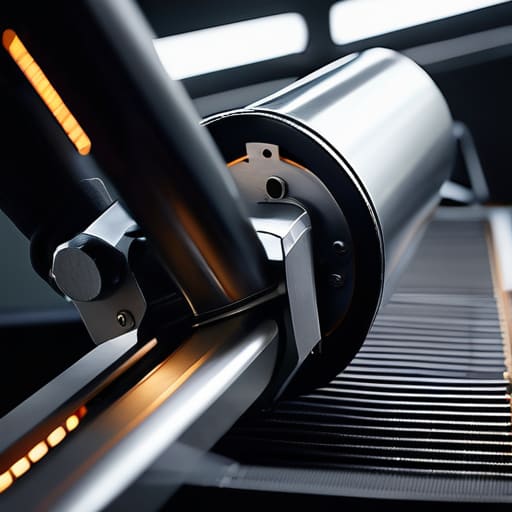
When you look at the hardware, you’re really looking at how much agency the designer is willing to hand over to the player. In a motorized setup, the machine is the protagonist. The treadmill drive system mechanics are designed to remove friction, creating a predictable, low-resistance loop where the motor dictates the pace. It’s the “auto-play” of fitness; the machine says, “I will provide the momentum, you just provide the presence.” It’s efficient, but it’s also a passive contract. You aren’t fighting the machine; you’re just riding it.
Manual treadmills, however, flip the script entirely. There is no motor to bail you out, meaning the player becomes the engine. When we talk about motorized vs manual treadmill gears, the manual version is essentially a high-friction negotiation between your stride and the belt. You aren’t just moving through a space; you are actively overcoming the mechanical resistance of the system. It’s a much more honest sentence. While a motorized belt tells you that progress is a constant, steady line, a manual belt tells you that progress is something you have to physically force into existence.
Treadmill Gear Ratio Explained the Math of Forced Motion
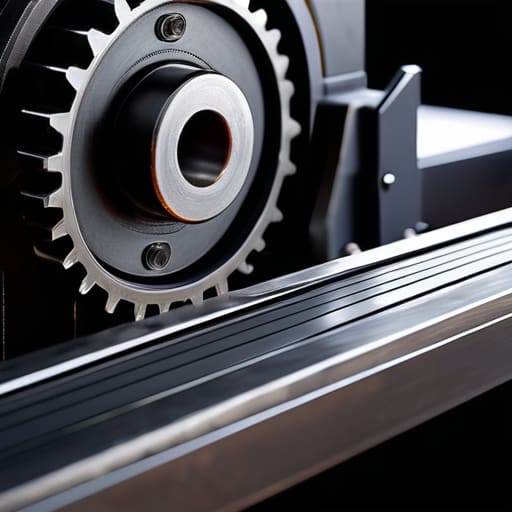
When we talk about the treadmill gear ratio explained in a way that actually matters to a player, we aren’t just talking about physics; we’re talking about the “feel” of the resistance. In a manual setup, the gear ratio is the silent negotiator between your effort and the machine’s response. If the ratio is poorly tuned, the machine feels like it’s fighting you—not in a “challenging workout” way, but in a “this thing is broken” way. It’s that awkward moment where you push, and the belt lags behind, creating a disconnect that breaks your rhythm.
In the motorized side of things, the treadmill drive system mechanics are designed to hide this friction entirely. The goal of a high-end motor is to make the gear ratio feel invisible, providing a constant, unyielding velocity that demands you keep up. But even here, the math is doing work. If the drive belt tension is off, or if the mechanical components of the motor are struggling against a bad ratio, you get that micro-stuttering sensation. It’s the mechanical equivalent of a game with bad tick rates: you’re moving, but the world isn’t quite registering your input.
The Player’s Guide to Not Getting Trapped by the Machine
- Watch the resistance curve, not just the top speed. A good treadmill tells you that you’re working hard by increasing the load; a bad one just tells you that you’re moving faster, which is just a way to trick your brain into ignoring how much your knees are screaming.
- Treat the gear ratio like a skill ceiling. If the machine feels “mushy” or unresponsive when you try to kick up the intensity, the designer has prioritized a smooth, low-friction experience over actual mechanical feedback. You want a machine that fights back when you tell it to.
- Recognize the “infinite loop” trap. If the treadmill lacks meaningful intervals or varying resistance profiles, it’s not a training tool; it’s a sentence that says, “We want you to stay on this belt for as long as possible to justify the subscription fee.”
- Check the latency between your effort and the machine’s reaction. In my own dev work, I’ve learned that even a half-second delay in feedback breaks the player’s sense of agency. On a treadmill, that lag makes the gear system feel like a disconnected chore rather than an extension of your own movement.
- Don’t mistake high resistance for progress. Just because the gear ratio is cranked up doesn’t mean you’re building power; sometimes it just means the machine is forcing you to fight its own internal friction rather than actually challenging your muscles.
The Cost of the Loop
At the end of the day, whether you’re looking at the mechanical friction of a manual belt or the calculated math behind a gear ratio, you’re looking at a designer’s attempt to control your momentum. We’ve broken down how these machines use physical or digital resistance to ensure that every step you take is a transaction. You aren’t just moving; you are engaging with a system designed to standardize your effort. If the ratio is off, the game feels sluggish; if the motor is too aggressive, the progress feels unearned. Understanding the mechanics means realizing that a treadmill isn’t just a tool for fitness—it is a carefully calibrated sentence about how much struggle a player is willing to tolerate before they decide to step off.
As someone who spends my days trying to code my own systems without accidentally building a prison, I’ve learned that the best designs don’t just trap you; they make the trap feel like a choice. The goal shouldn’t be to create a loop that people run because they have to, but one they run because the rhythm of the friction feels right. When you look at a gear system or a loot table next time, don’t just ask how it works. Ask what it’s trying to force you to feel. Because once you see the intent behind the machine, you stop being just a user and start being a critic of the loop.
Frequently Asked Questions
If the gear ratio is tuned to make the grind feel "smooth," at what point does the designer accidentally kill the player's sense of actual progression?
The moment you kill progression is when the gear ratio becomes so high that the friction disappears entirely. If every click or kill yields a predictable, seamless increment of power, you haven’t built a climb; you’ve built a slide. When the “smoothness” outpaces the player’s ability to notice the delta between yesterday and today, the sentence the designer wrote is: “Nothing you do actually matters.” You haven’t optimized the loop; you’ve just removed the stakes.
How do developers use variable resistance to mask the fact that the player is just hitting the same mechanical ceiling over and over?
It’s a sleight of hand. If the math stays static, the player realizes they’re just running in place. So, developers introduce variable resistance—changing enemy health pools, scaling damage, or shifting elemental resistances. It’s not actually making the game “deeper”; it’s just changing the flavor of the friction. They’re trying to trick your brain into thinking the obstacle is evolving, when really, they’re just tightening the screw on the same old loop.
Is there a way to design a gear system that rewards skill instead of just forcing players to invest more time to stay in the same place?
You’re asking for the holy grail: breaking the treadmill. To do that, you have to stop designing for “stat inflation” and start designing for “complexity expansion.” A gear treadmill says, “Run faster to stay level.” A skill-based system says, “The goal stayed the same, but now you have more tools to reach it.” Instead of a higher number, give them a new mechanic that requires precision. You aren’t competing with their time anymore; you’re competing with their mastery.

