
Pity Timers and Other Ways to Tame Rng
I spent three months of my life building a procedural loot system for my first solo project, convinced that complexity was the same thing as depth. I thought if I just layered enough weighted tables and rare proc chances on top of each other, I’d have a masterpiece. Instead, I ended up with a system that felt less like an adventure and more like a second job where the boss only pays you in crumbs. Most tutorials out there will try to sell you on complex algorithms or “meaningful variance,” but they completely ignore the fact that players don’t care about your math; they care about how they feel when the dice roll against them. If you want to learn how to use randomness well, you have to stop thinking like a mathematician and start thinking like a person who is tired of being cheated by a spreadsheet.
I’m not here to give you a lecture on bell curves or pseudo-random distribution theory. I’ve made enough mistakes in my own code to know that a “fair” system can still feel like absolute garbage if you don’t understand the social contract you’re signing with your players. In this post, I’m going to break down the difference between tension and frustration, and I’ll show you how to design systems that actually reward curiosity instead of just punishing bad luck. We’re going to look at what these mechanics are actually saying to your players, and how to make sure they aren’t accidentally telling them to go play something else.
Table of Contents
The Lies Told by Game Design Probability Mechanics
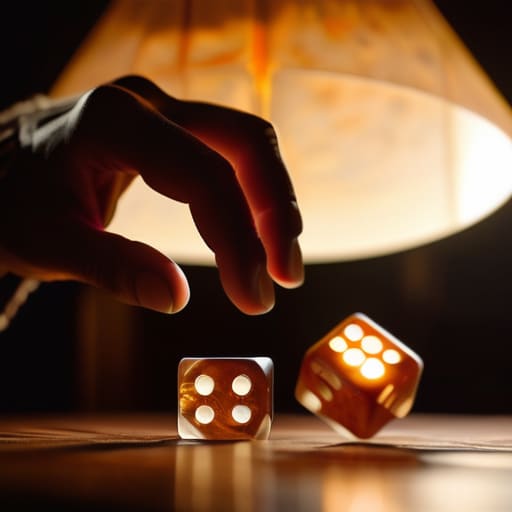
The problem with most developers is that they treat a loot drop or a critical hit chance like a math problem to be solved, rather than a conversation with the player. When you implement raw, pure RNG, you’re essentially telling your player, “Your skill doesn’t matter; the dice do.” That is a dangerous sentence to write. If a player executes a perfect rotation but misses a crucial proc because of a bad roll, they don’t feel “challenged”—they feel cheated. This is where the gap between math and psychology becomes a canyon.
To bridge that gap, you have to move toward pseudo-random distribution. I’ve seen this work wonders in small-scale combat systems where the game “cheats” in the player’s favor after a string of bad luck. It’s a way of managing player frustration with RNG by ensuring that the variance stays within a human-readable range. You aren’t actually breaking the math; you’re just making sure the math doesn’t tell a story of pure, unadulterated misery. If your probability mechanics feel like they’re actively working against the player’s intent, you haven’t built a challenge—you’ve just built a frustration engine.
Balancing Luck and Skill Without Breaking the Player

The problem with most devs is that they treat randomness like a coin flip, when they should be treating it like a conversation. If a player executes a perfect rotation but gets zero procs for ten minutes, you haven’t just given them bad luck; you’ve told them that their skill doesn’t matter. That is where you lose them. To fix this, you have to look at balancing luck and skill not as a math problem, but as a way to protect player agency in stochastic systems. If the player feels like they are playing against a rigged deck rather than a challenging environment, they stop trying to master the mechanics and start looking for the exit.
This is why I’m such a huge advocate for pseudo-random distribution. Instead of letting a true RNG roll every single time, you bake in a little bit of “mercy” behind the scenes. You’re essentially nudging the math to ensure that a streak of bad luck doesn’t turn into a death spiral. It’s a way of using controlled randomness in software design to make the game feel fair, even when it technically isn’t. You aren’t cheating the player; you’re just making sure the sentence your game is writing doesn’t accidentally say, “Your effort is meaningless.”
Five Ways to Stop Your RNG From Screwing Over Your Players
- Stop thinking in pure percentages and start thinking in “bad luck protection.” If a player misses a 90% hit chance three times in a row, they aren’t “unlucky”—they are being told by your game that their skill doesn’t matter. Use a weighted system that nudges the math in their favor the longer they fail; it turns a moment of frustration into a moment of tension that actually resolves.
- Always remember that randomness is competing with the player’s sense of agency. If a random proc happens during a boss fight, it’s a spice; if a random debuff happens that prevents the player from playing the game, it’s a wall. If the randomness takes the controller out of their hands, you haven’t built a mechanic, you’ve built a chore.
- Design your loot tables to tell a story about progress, not just a story about winning. A single “God Roll” dropped on day one can accidentally tell a player, “There is no reason to keep playing this game.” You have to balance the dopamine hit of a rare drop against the long-term sentence your game is writing about the value of the grind.
- Use randomness to create “meaningful variance” rather than “meaningless noise.” If a critical hit just does more damage, it’s just a bigger number. But if a critical hit changes how a skill behaves—maybe it knocks an enemy back or triggers a different animation—you’ve turned a math equation into a tactical decision.
- Watch out for the “Gambler’s Fallacy” trap in your UI. If you show a player a “1 in 100” drop rate, their brain is going to tell them they are “due” for a win by the 99th kill. When they hit kill 101 and still have nothing, they won’t blame the math; they’ll blame you for lying to them. Hide the raw math if it’s going to make them feel cheated by the reality of probability.
The Last Word on the Roll

At the end of the day, randomness isn’t a math problem to be solved; it’s a tool for managing player agency. If you treat RNG as a way to artificially extend playtime, you aren’t designing a game, you’re designing a chore. We’ve seen it a thousand times in the MMOs I moderate: a loot system that feels like a punishment rather than a reward. Whether you’re tweaking drop rates or building a complex combat engine, remember that every roll of the dice is a statement about how much you trust your players. If your systems are constantly telling them that their skill doesn’t matter, they’ll eventually stop trying to play your game and start trying to beat it.
I’m still building my own game, and I still mess this up. I still find myself tempted to add “just one more” layer of variance to keep people hooked, only to realize later that I’ve actually just created a wall of frustration. But that’s the point. Don’t aim for perfect mathematical equilibrium; aim for meaningful friction. Use randomness to create those rare, breathless moments where a player feels like they’ve truly defied the odds. If you can make a lucky roll feel like a hard-won victory instead of a statistical inevitability, you’ve done something most developers never quite manage. Stop trying to control the player, and start inviting them into the chaos.
Frequently Asked Questions
If I move away from pure RNG to something more deterministic, am I just replacing "luck" with "math homework" that players have to solve?
You might be, if you aren’t careful. There’s a thin line between “meaningful choice” and “spreadsheets in disguise.” If a player has to calculate a three-step optimization loop just to figure out if a drop is worth their time, you haven’t solved the luck problem; you’ve just turned your game into a job. The goal isn’t to remove the mystery, it’s to ensure the math feels like a tool for agency, not a barrier to play.
How do you stop a "bad luck streak" from turning into a player deciding your game is fundamentally broken and quitting?
You have to stop treating randomness like a math problem and start treating it like a psychological one. If your loot table says “roll for misery” for three hours straight, the player isn’t thinking about probability; they’re thinking your game is broken. I use “pity timers”—hidden counters that nudge the odds in the player’s favor after a certain number of failures. It’s a lie, sure, but it’s a kind one that keeps the conversation going.
At what point does adding "pity timers" or pseudo-randomness stop being a clever design choice and start feeling like the game is patronizing the player?
It stops being clever the moment the math becomes the mechanic. When you implement a pity timer, you’re telling the player, “I don’t trust you to enjoy the variance, so I’m going to babysit your dopamine.” It feels patronizing when the player realizes they aren’t playing against the odds anymore; they’re just filling a progress bar. If the tension of the “maybe” is gone, you haven’t designed a reward system—you’ve just designed a chore with a guaranteed payout.

