
Too Many Players Is a Problem Too
I spent three nights last week on a private server for a dead 2008-era sandbox MMO, just to see if the “golden era” feeling was real or just nostalgia. It wasn’t. I wasn’t playing a game; I was walking through a museum where all the exhibits were broken. Most developers will try to sell you on “dynamic scaling” or “sharding technology” as if these are magic fixes, but they’re just expensive ways to hide the truth about how server populations affect experience. When you look at the data, the truth is much simpler: a server isn’t just a collection of hardware; it’s a social ecosystem, and when the population drops below a certain threshold, the ecosystem doesn’t just change—it dies.
I’m not here to give you a lecture on concurrent user metrics or some sanitized industry whitepaper. I want to talk about the actual feeling of a world—the difference between the frantic, competitive energy of a crowded hub and the crushing, hollow silence of a ghost town. I’m going to break down why population density is the most important invisible mechanic in your game, and why getting it wrong is the fastest way to tell your players their time doesn’t matter.
Table of Contents
The Friction of Latency and Player Density

When you’re playing a solo RPG, a two-hundred-millisecond delay is a minor annoyance. But in an MMO, that delay is a breakdown in the social contract. There is a direct, punishing relationship between latency and player density that most developers try to mask with flashy UI, but you can always feel it. When a zone is packed with three hundred players all casting spells simultaneously, the server isn’t just struggling to calculate math; it’s struggling to maintain the illusion of a shared reality. You start seeing that dreaded “rubber-banding,” where your character snaps back to where they were three seconds ago. At that moment, the game is telling you that your agency is an illusion and the server is the one actually in control.
This is where the architectural choice between instance-based vs seamless worlds becomes a massive psychological pivot. If I’m building a game, I have to decide: do I want players to feel the weight of a crowded city, or do I want to hide them in a private bubble to save on CPU cycles? Seamless worlds feel more alive, but they force players into constant, unplanned competition for space and resources. Instances solve the technical headache, but they kill the “organic” feeling of a living world. You aren’t living in a society anymore; you’re just visiting a series of identical, lonely rooms.
The Desperate Hunger of Social Interaction in Low Pop Environments

When you’re playing in a low-pop environment, the game’s social sentence changes from “collaborate” to “survive.” In a high-pop server, you can afford to be picky about your guild or your dungeon group because there’s a surplus of bodies. But when the population dips, the math shifts. Suddenly, every person you see in a zone isn’t just another player; they are a potential lifeline. You stop looking for the perfect build and start looking for anyone who isn’t a bot. This creates a weird, frantic kind of intimacy where players cling to each other because the alternative is total isolation.
This desperation is where the real magic—and the real toxicity—happens. Because social interaction in low-pop environments is so scarce, every interaction carries massive weight. A single bad actor can ruin the mood for the entire server, whereas in a crowded world, they’re just a drop in the ocean. You see players forming tight, almost claustrophobic social loops just to keep the game feeling alive. It’s a high-stakes way to play, where the scarcity of people makes every friendship feel like a hard-won resource.
Designing for the Empty Room and the Mosh Pit
- Don’t mistake a “solo-friendly” tag for a solution to low population; if your game requires a group to clear content but the server is a ghost town, you haven’t designed a solo game, you’ve designed a barrier to entry that punishes players for being unlucky with their shard choice.
- If you can’t guarantee a high player density, stop competing with high-density MMOs for the “social hub” experience and start competing with single-player RPGs for the “meaningful journey” experience; you have to change what the player’s time is actually being spent on.
- Treat your matchmaking queue as a psychological contract; a long queue tells a player their time is a commodity you’re willing to waste, while a fast queue in a low-pop environment tells them the world is shallow and won’t actually offer the social friction they’re looking for.
- Scale your economy’s velocity to your population density, because a hyper-active auction house in a low-pop server is a lie that creates artificial scarcity and makes new players feel like they’ve arrived at the end of the world rather than the beginning of an adventure.
- Build “social safety nets” into your mechanics—like asynchronous cooperative play or shared world progression—so that when the server density inevitably dips, the game is still telling the player they are part of a living system rather than just shouting into a void.
The Ghost in the Machine
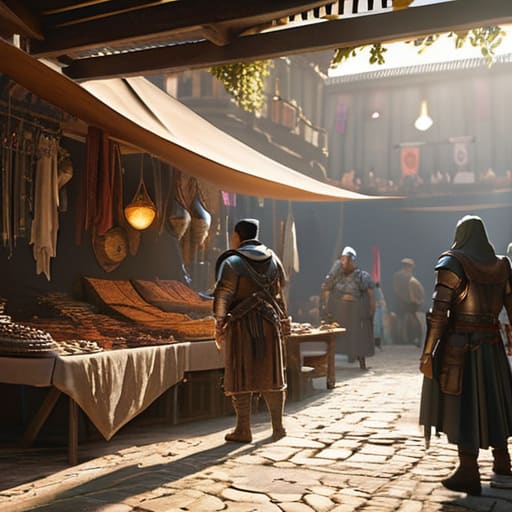
At the end of the day, server population isn’t just a number on a dashboard or a metric for a marketing department; it’s the invisible hand that shapes every decision a player makes. When you look at the math, you see density and latency, but when you play, you feel the weight of the world. You feel it when a single player in a zone turns a casual quest into a high-stakes social negotiation, or when a crowded capital city turns a quick gear check into a frantic battle for screen real estate. We have to stop treating population as a secondary feature and start seeing it for what it is: the fundamental architecture of the player’s reality. If the population math is wrong, the social sentences the game is trying to write will always come out as gibberish.
As someone who spends my nights staring at my own buggy, lonely code, I’ve learned that you can’t just “fix” a dead server with a patch or a new loot table. You have to design for the human presence that might—or might not—show up. Whether you are building a massive sprawling epic or a tiny niche experiment, remember that you aren’t just managing data packets; you are curating an ecosystem. Design your systems with the awareness that every player is competing for a slice of a finite social pie. If you get that right, the game won’t just feel alive; it will feel like a place where people actually belong.
Frequently Asked Questions
If a game is designed around player density, can you actually fix a dying server with a matchmaking system, or does that just turn the game into a different, lonelier product?
You can’t fix a structural problem with a band-aid of matchmaking. If a game’s soul is built on the friction of a crowded hub or the spontaneous chaos of a populated zone, matchmaking doesn’t “fix” the server—it just turns your MMO into a series of private, sterile instances. You aren’t saving the world; you’re just putting players in a waiting room together. It stops the bleeding, sure, but it changes the genre.
At what point does "instanced content" stop being a way to save players from lag and start being a way to hide the fact that the world is actually empty?
It’s the moment the “convenience” stops feeling like a choice and starts feeling like a boundary. When instancing is a tool to manage congestion, it’s a feature; when it’s used to prevent you from seeing the literal nothingness between quest hubs, it’s a mask. If you can’t walk from one town to another without a loading screen or a private corridor, the game isn’t protecting your performance—it’s protecting the illusion of a living world.
How do you balance the economy of a high-pop server where inflation is constant against a low-pop server where a single player can corner the entire market?
You’re essentially choosing between a flood and a drought. On high-pop servers, you’re fighting the “infinite faucet”—you need aggressive gold sinks, like luxury cosmetics or high-cost crafting taxes, just to keep the currency from becoming meaningless. On low-pop servers, you’re fighting the “monopoly trap.” You have to implement systemic guardrails, like trade caps or non-tradable essential goods, to stop one whale from becoming the server’s unofficial central bank.

