When the Story Says One Thing and the Systems Say Another

Stop telling me that “ludonarrative dissonance” is some high-brow academic concept that only PhDs can debate. It’s not. It’s much simpler and much uglier than that. It’s what happens when your opening cutscene tells me I’m a pacifist monk seeking enlightenment, but your combat loop demands I click a button sixty times a minute to…
Telling a Story With No One Speaking

I spent three weeks last year trying to build a “haunted” bedroom for my own project, and I ended up with nothing but a pile of expensive, high-poly assets that felt like a museum exhibit rather than a lived-in space. Most design blogs will try to sell you on this idea that environmental storytelling is…
Guiding a Player Without an Arrow
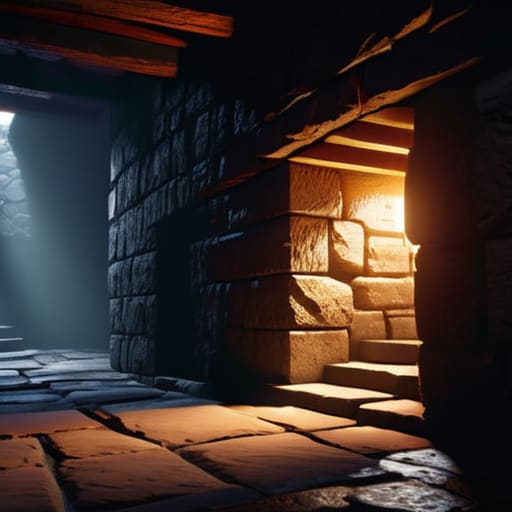
I spent three weeks last year trying to build a simple dungeon for my own project, only to realize I was fighting a losing battle against my own assets. I kept adding massive, glowing pillars and ridiculous neon signs, thinking that’s how you teach a player where to go. But I was wrong; I wasn’t…
Shipping Is a Skill Separate From Building

I remember sitting in my dorm room at 3:00 AM, staring at a build that was basically just a collection of broken scripts and placeholder textures, feeling like a complete fraud. I thought that if I didn’t fix every single collision bug or polish every UI element, I was failing the most basic rule of…
Cutting a Feature You Spent a Month on

People love to tell you that scope creep is a resource problem, like you just need a bigger budget or a more efficient sprint cycle to fix it. They treat it like a math equation, but they’re wrong. When you’re staring at a feature list that’s growing faster than your actual code, the problem isn’t…
Deciding What Not to Build

I spent three months of my life building a complex, procedurally generated weather system for my solo project, convinced it was the “soul” of the game. I was wrong. While I was obsessing over cloud density, my playtesters were complaining that they couldn’t even figure out how to open the inventory. I had fallen into…
Players Report Symptoms, Not Causes

Most developers think that learning how to read player feedback means buying a massive sentiment analysis tool or staring at heatmaps until their eyes bleed. They treat player complaints like data points to be smoothed out in a spreadsheet, but that’s a mistake that costs more than just money—it costs your game’s soul. When a…
Running a Playtest Without Leading the Witness

I once spent three weeks building a sophisticated telemetry dashboard for a prototype, thinking that if I could just see every single click and movement, I’d finally understand my game. It was a total waste of time. I was so obsessed with the data that I completely missed the fact that my playtesters were only…
Watch Them Play and Say Nothing

Stop thinking you need a massive budget and a dedicated QA firm to figure out if your game actually works. Most people treat playtesting like a high-stakes clinical trial, thinking they need a laboratory setting and a spreadsheet for every single movement. But if you’re looking for a way to learn how to test with…
Designing Accessibly From the Start Costs Almost Nothing

I’ve spent enough time in the guts of broken MMOs to know that when people talk about how to design for accessibility, they usually mean it as a checkbox for a legal department or a way to squeeze an extra five percent out of a niche demographic. They treat it like some expensive, high-level DLC…